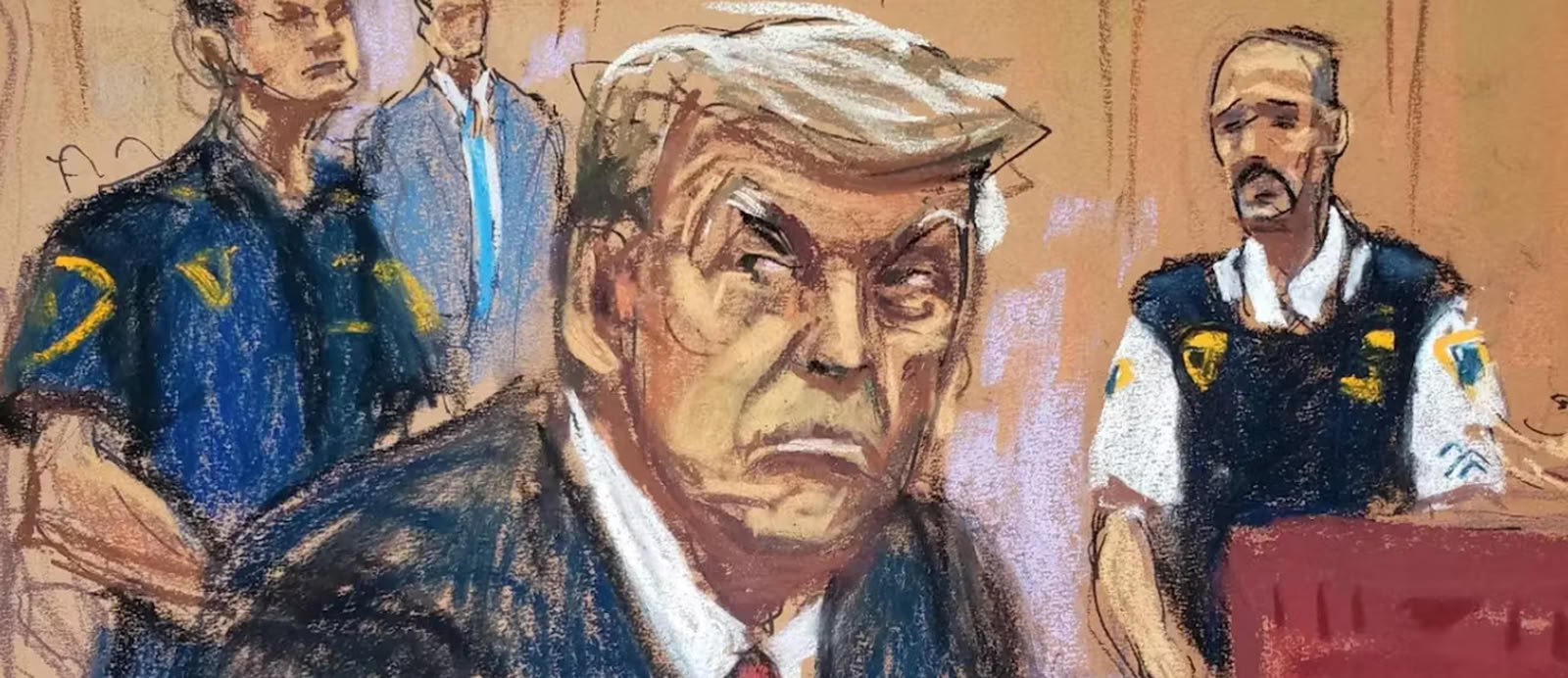
The Unfolding Legal Drama of Donald Trump: A Spotlight on Democracy
The recent news of former U.S. President Donald Trump pleading not guilty to four criminal
charges, all relating to his efforts to overturn the 2020 presidential election, raises serious
and significant concerns about the future of American democracy, the rule of law, and political
accountability. This situation presents a crucial test for the American legal system: Can it
hold accountable a man who once held the highest office in the country?
The indictment of Trump announced in a courthouse that bore witness to the violence of the
January 6 insurrection, signals a pivotal moment in American political history. The irony of the
situation is not lost — Trump standing trial in the same building where over a thousand of his
supporters, driven by his unfounded claims of election fraud, also made their appearances in the
court.
Despite the gravity of the charges, the former president continues to depict himself as the
victim of a political witch hunt, maintaining that this level of political persecution was never
supposed to happen in America. His defiance, however, does little to diminish the severity of
the charges and the potential impact on his political career and legacy.
But there’s more than just one man’s fate at stake here. This case is about the integrity of
American democracy itself. The charges against Trump — conspiring to defraud the United States
and obstruct an official proceeding — are fundamentally about the violation of the democratic
process. These charges are not just about the actions of January 6, but also the dangerous
narrative that fueled them.
Trump’s indictment brings into focus a key issue: how the idea of “post-truth” has percolated
into our political discourse. That the former president continues to peddle the “big lie” of the
stolen election is a reminder that the assault on truth continues unabated. Indeed, the charges
against Trump underline how destructive and corrosive misinformation and disinformation can be,
especially when it comes from the highest echelons of power.
Another critical aspect to consider in this unfolding drama is the argument that Trump exploited
the chaos and violence of January 6 to keep alive his efforts to overturn his electoral loss.
The indictment alleges that Trump and his co-conspirators effectively tricked individuals into
creating and submitting false certificates asserting their legitimacy as electors. This ploy, if
proven, unveils a frighteningly undemocratic facet of Trump’s attempt to cling to power.
The former president’s legal battles are far from over. His ongoing legal encounters have
historical implications, particularly as they occur against the backdrop of the Republican
presidential primary debate and the 2024 nomination. Will Trump’s legal woes influence the
Republican nomination process or change his standing among his supporters? Only time will
tell.
However, one thing is certain: the repercussions of Trump’s trial extend beyond the man himself.
They affect the very fabric of American democracy. His trial is a reckoning — a reckoning of how
much the U.S. values the rule of law, and how committed it is to ensuring that no one, not even
a former president, is above it.
The case, in many ways, is also a reckoning for the Capitol rioters, who have so far borne the
brunt of the legal consequences. The sentences passed against them serve as reminders of the
weight of their actions and of the dangers of misinformation. They highlight the severe
consequences of undermining democracy.
Overall, the unfolding legal drama surrounding Trump is a testament to the resilience of
American institutions. It sends a strong message that the actions taken to undermine democracy
will not be overlooked and that those who attempt to erode the nation’s democratic values will
be held accountable, regardless of their position.
As we look forward to the future, we must also take this moment to reflect. We must remember the
importance of truth, respect for the democratic process, and the rule of law. And above all, we
must ensure that our political leaders uphold these values. After all, the strength of a
democracy lies not in the power of its leaders, but in the integrity of its institutions and the
principles they represent.