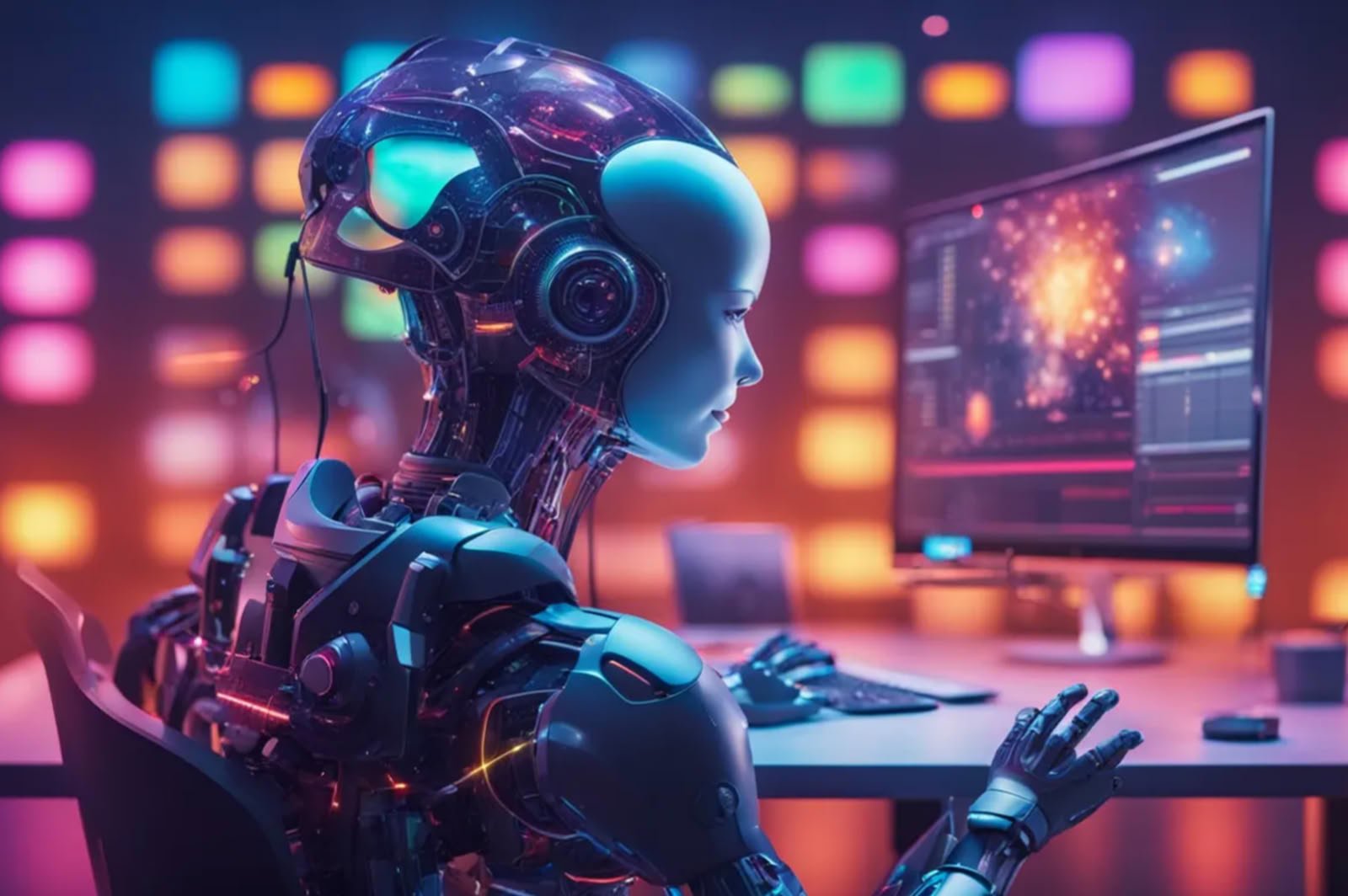
The Future of Filmmaking
When Everyone Becomes a Creator
Imagine a world where storytelling reaches its ultimate democratization. A time where filmmaking
no longer requires vast studios, multimillion-dollar budgets, or armies of crew members.
Instead, the only resource a filmmaker needs is their imagination — and perhaps a robust AI
platform. This isn’t some distant dream; it’s a future that’s rapidly approaching.
The idea that anyone with a story to tell could transform their vision into a full-length
feature film within minutes sounds revolutionary. But it’s not just revolutionary — it’s
inevitable. Artificial intelligence is already reshaping industries, and soon, it will transform
filmmaking into a universally accessible art form. The question is, what happens when everyone
becomes their own director, producer, and platform owner?
From Vision to Screen in Minutes
Today, creating a feature film is a monumental task. Writers, directors, actors, and technical
crews collaborate over months, sometimes years, to bring a story to life. But with AI, this
process could be condensed into minutes. You feed your script into an advanced AI platform,
specify your visual and tonal preferences, and voilà — a fully rendered, high-quality film is
ready to be shared with the world. No casting calls, no location scouting, no post-production
headaches.
In this future, the true currency of filmmaking isn’t financial investment — it’s creativity.
Those with the strongest imaginations will thrive. A gripping story or a unique perspective will
outweigh the need for traditional resources. For the first time in history, storytelling could
become a truly level playing field.
The Rise of Personal Streaming Platforms
Take it one step further: what if people could distribute their films as easily as creating
them? Personal streaming platforms could replace massive streaming giants like Netflix. Instead
of subscribing to a corporate-dominated service, viewers might explore countless individual
creators’ platforms. Each person could be a one-person Netflix, building a catalog of films that
reflect their unique voice and vision.
This shift would allow creators to cultivate niche audiences, leading to a golden age of diverse
and inclusive storytelling. Stories from marginalized communities, experimental genres, and
unexplored cultural narratives could flourish. The audience, not corporate executives, would
decide what deserves the spotlight.
A Flood of Creativity — or Chaos?
Of course, democratizing filmmaking on this scale brings its own challenges. If everyone can
create and release films at will, the volume of content could become overwhelming. Imagine
thousands — perhaps millions — of films being uploaded daily. In such a saturated market, how do
you stand out?
Quality will become the ultimate differentiator. While AI can assist in technical execution, the
heart of a story — its characters, conflicts, and emotions — will still depend on the human
creator. Those who combine strong narratives with creative innovation will rise above the noise.
Additionally, audiences may evolve into more active participants in the filmmaking process.
Imagine viewers voting on alternate endings or suggesting plot twists that AI can instantly
render. Storytelling could become a collaborative experience, where creators and audiences shape
narratives together in real time.
The Ethical Dilemmas of AI Filmmaking
As exciting as this future sounds, it also raises significant ethical questions. Who owns the
creative rights to a film created with AI? How do we ensure AI tools aren’t misused to generate
harmful or exploitative content?
Moreover, there’s the risk of homogenization. If everyone uses similar AI platforms, will films
start to look and feel the same? Creativity could stagnate if innovation becomes limited by the
AI’s parameters. Safeguards and continuous development will be crucial to preserving originality
and protecting the integrity of this new medium.
A New Era of Empowerment
Despite these challenges, the potential benefits of AI filmmaking are staggering. For aspiring
creators who have always dreamed of sharing their stories but lacked the means, this technology
is a gift. It removes barriers and democratizes the creative process, empowering anyone with a
story to tell to do so on a global stage.
Imagine a world where a high school student creates a blockbuster film in their bedroom, or
where someone from a remote village shares a story that resonates with millions. The power to
influence, inspire, and entertain will no longer be confined to a privileged few.
The Daydream Becomes Reality
I often find myself daydreaming about this future. I picture people unleashing their creativity
in ways we can’t even imagine yet. Instead of scrolling endlessly through generic content, we’ll
be diving into worlds crafted by individuals like us — worlds that feel personal, authentic, and
deeply human.
Perhaps the most exciting aspect is that the boundaries between creator and audience will blur.
We’ll all have the tools to tell our stories, but we’ll also have the opportunity to shape and
engage with others’ narratives. It’s not just about filmmaking — it’s about storytelling
evolving into something much more interactive and inclusive.
My First Film in the AI Era
If I had this technology at my fingertips today, I’d already be working on my first film. It
would be a deeply personal story — one that explores the human condition, but with a fantastical
twist. Maybe it’s a story about time travel, or a heartwarming tale of a small-town hero. The
beauty of this technology is that it doesn’t matter how ambitious or outlandish the idea is; the
only limitation is my imagination.
And that’s the most exciting part. In a world where creativity reigns supreme, we are all
storytellers — and soon, we’ll all be filmmakers too.