Why Does One Person Envy Another?
A Socialist Perspective on Envy and Capitalism’s Broken Promises
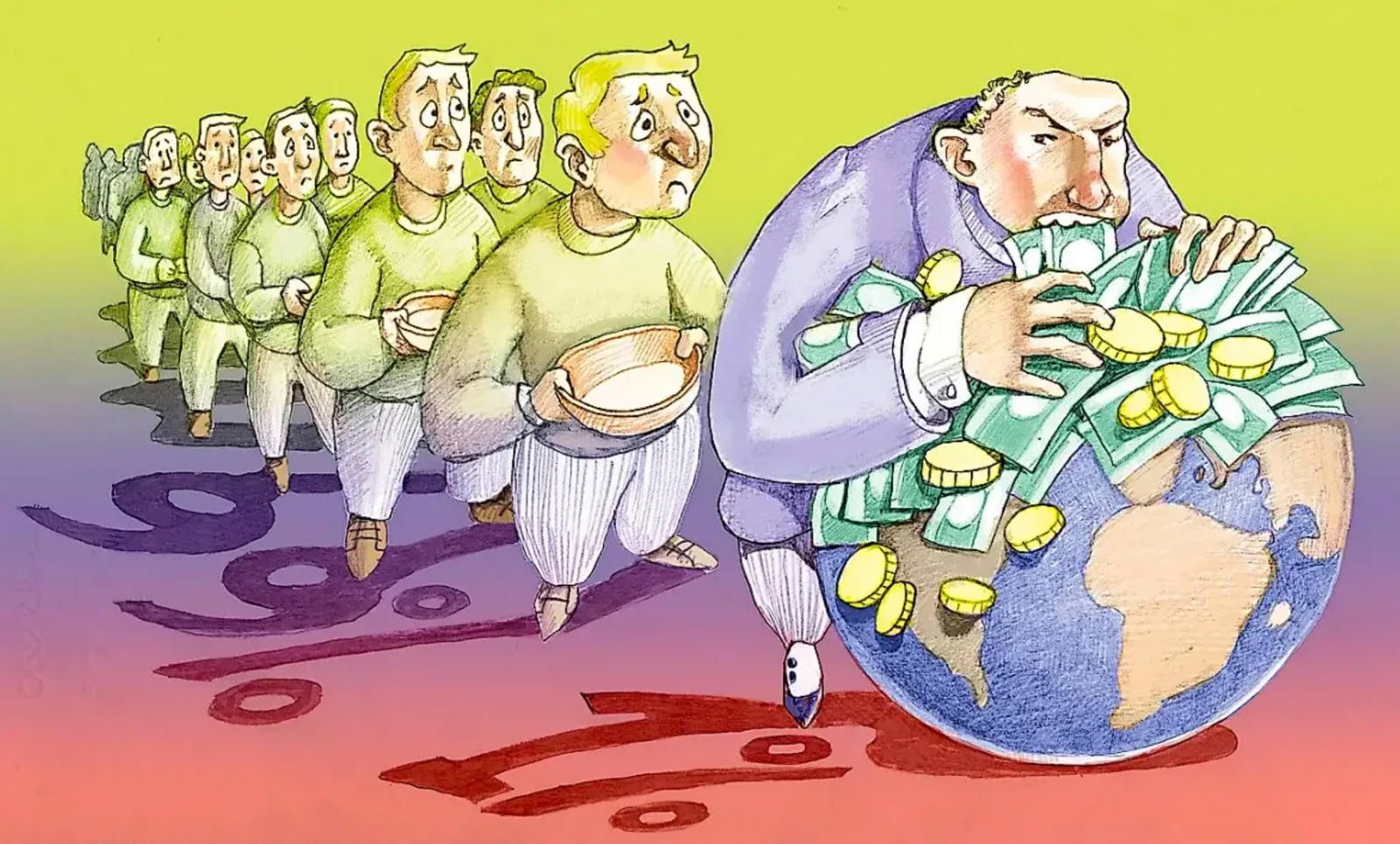
Envy is an emotion often dismissed as a personal flaw or weakness, but in reality, it’s a symptom
of deeper societal forces at play. Envy, as we experience it today, is not a random or purely
personal feeling; it’s a byproduct of the economic and social systems we live in. Under
capitalism, envy is nearly unavoidable, and this is no accident. The way our society is
structured, designed to pit individuals against one another in a relentless quest for more
wealth, status, and recognition, fuels envy at every turn. Capitalism not only breeds envy but
relies on it to keep its engines running. Let’s unpack why envy thrives under capitalism, how
this emotion is tied to a distorted value system, and why socialist societies would see a
decline in envy as a corrosive force.
Capitalism, at its core, is based on competition. Success is measured not by communal well-being
or individual happiness but by profit margins and market shares. This competitive structure
forces people to compare themselves constantly, seeing others not as collaborators but as
competitors. When society measures an individual’s worth by their material success, it pushes
people to look at each other through a lens of scarcity. There are only so many jobs, so much
recognition, and so much wealth to go around, and if someone else has more, that must mean there
is less for everyone else. Envy, then, becomes a natural response to a system that fosters
division and individualism over collective good.
Under capitalism, the idea of “success” is weaponized. From an early age, people are exposed to
the notion that in order to be someone, to be respected, and to have a fulfilling life, they
must accumulate wealth, achieve professional success, and buy into the endless cycle of
consumption. This message is reinforced by advertising, social media, and popular culture, each
one showcasing an idealized lifestyle that few can realistically attain. People are led to
believe that they must constantly strive to have what others have — whether it’s a better job, a
bigger house, or a more luxurious lifestyle. Envy becomes a tool used by capitalist structures
to ensure people stay on the treadmill of consumption, perpetually unsatisfied with their own
lives because someone else always appears to have more.
Moreover, capitalism exploits envy by creating a sense of inadequacy. Advertisers know this
well; they use envy as a marketing tool to make people believe they need certain products or
lifestyles to be complete or worthy. The underlying message is that if you don’t have what
others have, you are somehow lacking. This fosters a cycle of insecurity and envy, where
individuals measure their worth not by who they are but by what they own. This system doesn’t
just encourage envy — it depends on it. Without a constant need to compete and consume,
capitalism’s drive for perpetual growth would falter. Envy keeps people striving for what others
have, feeding the demand for more and more consumption, even if this endless pursuit rarely
brings true satisfaction.
But what would a socialist perspective say about envy? From a socialist viewpoint, envy is not
just an unfortunate feeling but a response to an unjust system. Socialism, as a philosophy,
rejects the notion that one’s worth should be measured by material success or status. Instead,
it values equality, cooperation, and the idea that everyone should have access to a good quality
of life, regardless of their social or economic status. In a socialist society, the goal is not
to accumulate more than others but to ensure that everyone’s needs are met. When people are
secure in their livelihoods and free from the pressures of constant comparison, envy loses much
of its power.
Socialism also removes the artificial scarcity created by capitalism. In a capitalist society,
resources and opportunities are hoarded by a select few, leaving the majority to compete for
what’s left. This scarcity breeds envy because people feel they are constantly lacking. However,
in a socialist society, where resources are distributed based on need rather than profit, there
is less reason to envy others. If everyone has access to the essentials — housing, healthcare,
education, and a fair income — then there is less cause for envy because no one is forced to
compete for basic survival. People can focus on personal and collective growth rather than
constantly measuring themselves against others.
Moreover, socialism promotes a sense of community and shared responsibility that diminishes
envy. When individuals see themselves as part of a collective, working together toward common
goals, there is less incentive to envy one another. Instead of competing, people cooperate,
understanding that their success is tied to the well-being of the community as a whole. This
sense of solidarity reduces the need for envy because individuals are not striving to “one-up”
each other but are working towards shared success and stability. This shift in focus from
individual gain to collective good creates an environment where envy has little room to
grow.
In socialist societies, where materialism is downplayed, and communal well-being is prioritized,
envy is less prevalent because there is a cultural shift away from measuring worth by
possessions or status. When society values people for who they are and what they contribute
rather than what they own, the urge to envy others diminishes. People are less likely to feel
inadequate or inferior because they are not constantly bombarded with messages that tell them
they need more to be enough.
Capitalism, on the other hand, thrives on making people feel perpetually incomplete, always
needing to strive for the next achievement or the next purchase. Envy becomes a natural response
in a system where people are conditioned to believe that their worth is tied to their material
success. But in a socialist society, where resources are shared, and people are valued for their
contributions to the community rather than their personal wealth, envy loses its grip. The
desire to compete diminishes, replaced by a sense of shared purpose and mutual respect.
End of day, envy is not an inherent trait but a response to the conditions of the society we
live in. Under capitalism, where competition, materialism, and individualism are prioritized,
envy is practically inevitable. People are conditioned to measure their worth by comparing
themselves to others, leading to a cycle of envy and dissatisfaction. Socialism, by contrast,
offers a different perspective — a society where worth is not measured by material success,
where resources are shared, and where the community is valued over the individual. In such a
society, envy would not disappear entirely, but it would hold less power. When people are valued
for who they are rather than what they have, and when resources are distributed equitably, envy
becomes less of a driving force and more of a passing feeling. A socialist society, in its
truest form, would not eliminate envy but would create conditions where envy is less likely to
thrive, allowing individuals to focus on personal fulfillment and collective well-being.