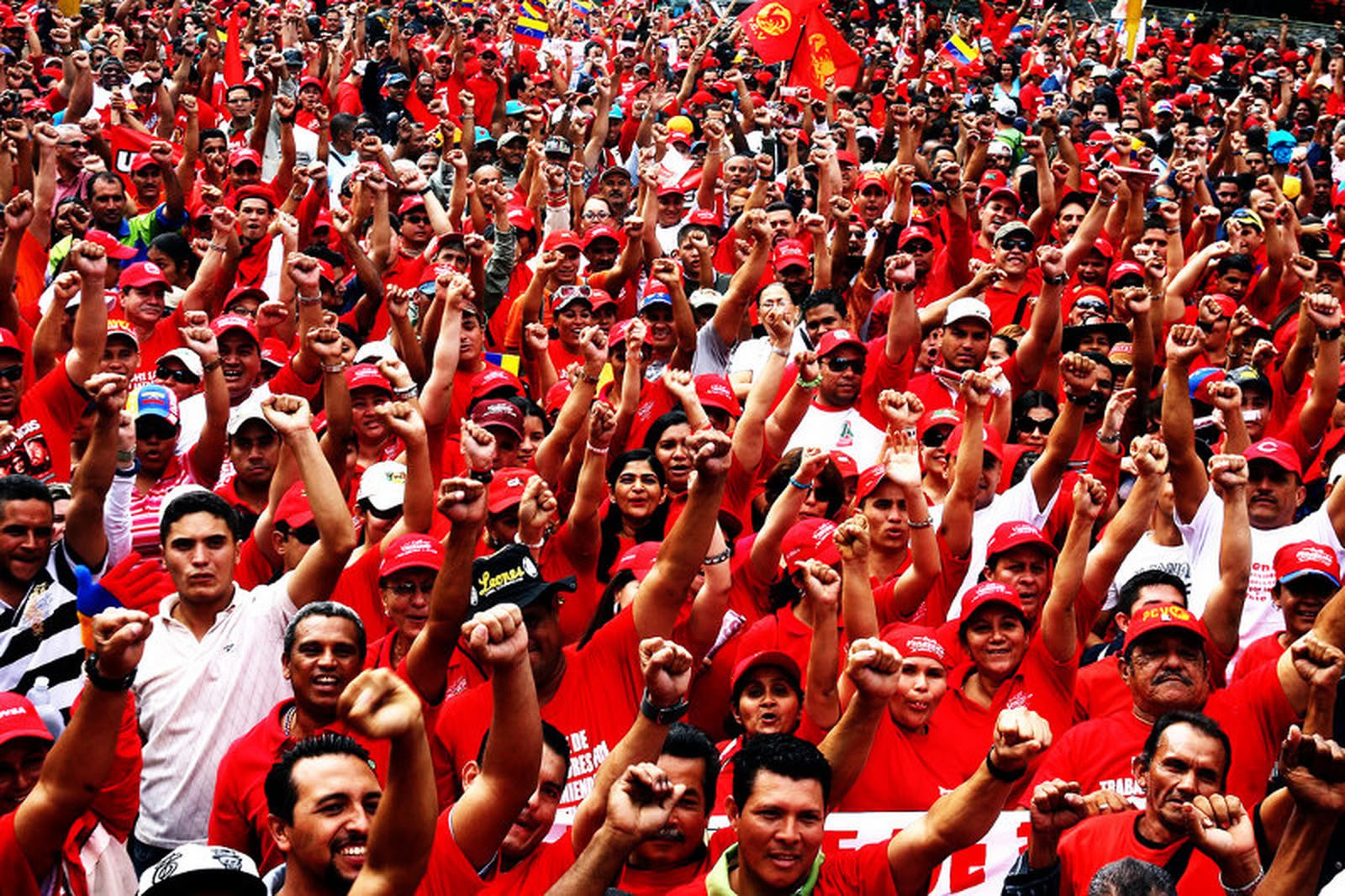
The Struggle for Venezuela
A Battle Against Exploitation and Deception
As the world watched, Venezuela recently held elections, and the aftermath has been anything but
peaceful. The dominant powers that exploit the world, along with their media allies and the
traitorous Venezuelan liberals eager to sell out their country to foreign interests, have
stooped to despicable lows to unseat President Maduro. Despite Maduro’s victory, these forces
scream fraud, spreading lies to achieve their ultimate goal: the unrestrained plunder of
Venezuela’s natural resources, including its vast petroleum reserves. Their agenda is clear —
make the rich richer and the poor poorer.
The Machinations of Global Capitalism.
In our current global landscape, the ruthless march of capitalism — particularly in its liberal
economic guise — has wreaked untold havoc on both humanity and the environment. This insidious
system, driven by profit above all else, has poisoned our planet, our food, and our very lives.
The rise in infertility and cancer rates is no coincidence; it is a direct consequence of a
system that values economic gain over human and ecological well-being. The global capitalist
framework promotes exploitation on a massive scale, leading to vast inequalities and
environmental degradation.
Capitalism’s fundamental drive is to accumulate wealth, regardless of the cost to people or the
planet. This relentless pursuit of profit has led to the depletion of natural resources, the
destruction of ecosystems, and a widening gap between the rich and the poor. The powerful
corporations and their political allies manipulate markets and policies to serve their
interests, often at the expense of the common good.
The Venezuelan Election: A Microcosm of Global Greed.
The recent Venezuelan elections serve as a stark reminder of the lengths to which these
capitalist forces will go. With their substantial financial resources and media control, they
fabricate stories of electoral fraud to delegitimize Maduro’s legitimate victory. Their
intention is not just to undermine a government that resists their exploitative practices but to
pave the way for a puppet regime that will hand over Venezuela’s wealth on a silver platter.
These tactics are part of a broader strategy to destabilize any nation that dares to defy the
neoliberal economic order, ensuring that no country can stand independently against the tide of
global capital.
The media, controlled by these powerful interests, plays a crucial role in shaping public
perception. They spread misinformation and create narratives that support their agenda, making
it difficult for the truth to emerge. The accusations of fraud against Maduro are a classic
example of this manipulation, designed to erode trust in the electoral process and justify
intervention.
Capitalism’s Destruction of Nature.
Capitalism, with its insatiable appetite for profit, has left a trail of environmental
destruction in its wake. From deforestation to pollution, the relentless pursuit of economic
growth has pushed our planet to the brink. In Venezuela, this translates to the relentless
extraction of oil, with little regard for the ecological damage it causes. The country’s rich
biodiversity is at risk, sacrificed on the altar of foreign profit. This environmental
degradation is not limited to Venezuela; it is a global phenomenon, with the Amazon rainforest
being decimated for agricultural expansion and industrial activities, contributing to climate
change and loss of biodiversity.
The Poison in Our Food.
Liberal economies have also adulterated our food supply. In their quest to maximize profits,
they have filled our diets with additives and chemicals, causing a surge in health issues. The
rise in infertility and cancer is not an isolated phenomenon but a direct result of consuming
these toxic substances. This is the dark side of a system that prioritizes economic efficiency
over human health. Processed foods, laden with preservatives and artificial ingredients, have
become the norm, while organic and natural foods are often priced out of reach for the average
consumer. The long-term health consequences of this shift are profound, contributing to a public
health crisis that includes obesity, diabetes, and various forms of cancer.
The food industry, dominated by a few powerful corporations, prioritizes profit over nutrition.
They use marketing tactics to promote unhealthy products while lobbying against regulations that
would protect consumers. This has led to a situation where access to healthy, nutritious food is
a privilege, rather than a right, exacerbating health inequalities.
The Social Cost of Economic Liberalism.
The social implications of this economic model are equally dire. Inequality has soared, as
wealth becomes concentrated in the hands of a few. In countries like Venezuela, this means that
while foreign corporations and local elites amass fortunes, the majority of the population
struggles with poverty. This stark disparity fuels social unrest, creating a cycle of
instability that benefits no one but the exploiters. The rich continue to get richer, while the
poor are left to fend for themselves in an increasingly hostile economic environment. This
growing inequality erodes social cohesion, leading to increased crime, mental health issues, and
a breakdown of community bonds.
Economic liberalism promotes the idea that the market should be free from government
intervention, but in reality, it often leads to policies that favor the wealthy. Tax cuts for
the rich, deregulation of industries, and cuts to social programs are all justified in the name
of economic efficiency, but they only serve to deepen inequality. The resulting social
fragmentation makes it difficult for communities to come together and advocate for change.
A Call for Resistance.
In light of these realities, it is crucial to resist the false narratives propagated by those
who seek to dominate Venezuela. The accusations of fraud against Maduro are a smokescreen for a
larger agenda of exploitation. We must stand firm against these forces, not just for Venezuela
but for the future of our planet and humanity. Only through collective awareness and action can
we hope to forge a future that prioritizes human and ecological well-being over profit. This
resistance requires global solidarity, connecting struggles across borders to challenge the
hegemony of neoliberal capitalism.
Grassroots movements and social organizations play a vital role in this resistance. They work to
raise awareness, mobilize communities, and advocate for policies that prioritize people and the
planet. By supporting these efforts, we can build a more just and sustainable world.
The situation in Venezuela is a microcosm of a broader struggle against the destructive forces
of global capitalism. This economic system, driven by greed, has inflicted immense harm on our
environment, our food, and our societies. The recent elections are a stark reminder of the
lengths to which these forces will go to achieve their ends. As we navigate this complex
landscape, it is imperative to remain vigilant and resist the deceitful narratives that serve
the interests of the few at the expense of the many. Only through collective awareness and
action can we hope to forge a future that prioritizes human and ecological well-being over
profit.
The struggle for Venezuela is not just a local issue but a global one. It is a fight against the
exploitative practices of a system that values profit over people. By standing with Venezuela,
we stand for a world where resources are used sustainably, where food is safe and nutritious,
and where the wealth of a nation benefits all its citizens, not just a privileged few. This is a
battle for the soul of our planet, and it is one that we must win. The fate of Venezuela’s
natural resources, its environment, and its people are intertwined with the broader global
struggle for justice, equity, and sustainability. Together, we can challenge the status quo and
build a future that values the well-being of all over the profits of a few.
We must remember that the power to effect change lies in our collective hands. By supporting
policies that promote social and environmental justice, holding corporations accountable, and
building resilient communities, we can create a world where everyone has the opportunity to
thrive. The path ahead is challenging, but with determination and solidarity, we can overcome
the forces of exploitation and build a better future for all.
7. Engage Politically Beyond Elections
While elections are essential, they’re not the only way to create change. Continuous political
engagement — especially at the local level — keeps authoritarianism in check. This involves not
just voting but actively participating in local government meetings, town halls, and
accountability processes for elected officials.
Action Steps:Attend town halls and council meetings to voice your concerns,
advocate for policies that protect civil liberties, and demand accountability. Engage in local
campaigns to elect representatives who support leftist values and anti-authoritarian
principles.
Hold Leaders Accountable: Voting is only the beginning; monitor the actions of
those you support and organize to hold them accountable if they drift from progressive
values.
Collective Resistance Over Individualism
While some may advocate for individual coping mechanisms or consider leaving the country, a true
response to authoritarianism requires us to confront it directly and collectively. Through
community solidarity, workplace organizing, alternative media, and direct action, we can stand
against the forces that seek to strip away our freedoms and erode democracy.
Our aim as leftists isn’t just to resist Trump but to dismantle the very systems that empower
fascist ideologies. Together, we can build a society rooted in equality, justice, and true
democracy.