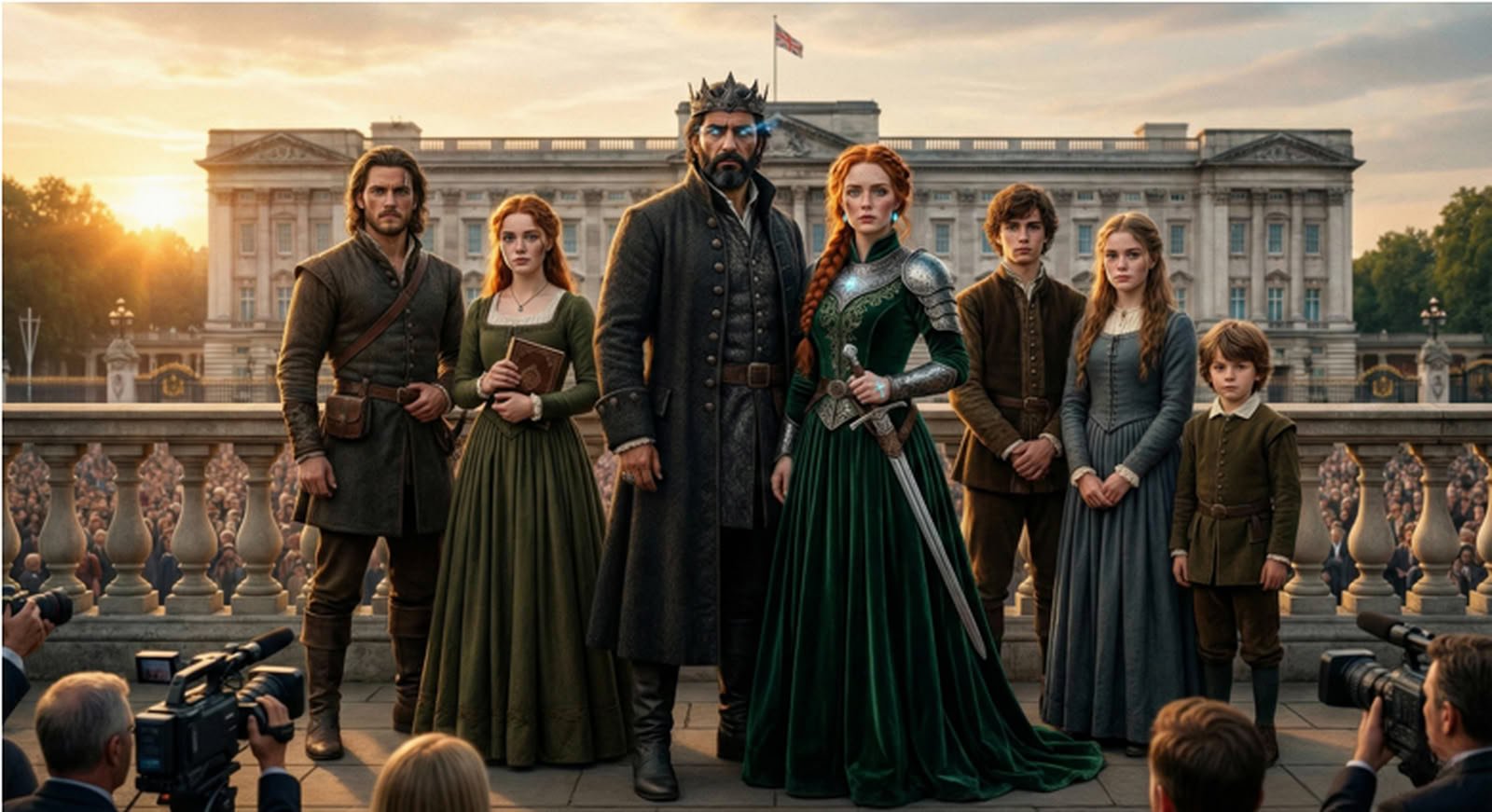
The Architect of Eternity
Chapter 1: The Cosmic Intersection
Date: May 15, 2025 Location: Paterson, New Jersey – The
"Horizon" Advanced Physics Laboratory
The universe does not usually scream. It hums, it vibrates, it whispers in the language of
mathematics. But at 2:14 PM, inside the subterranean chamber of the Horizon Project, the
universe screamed.
Mutlu, a brilliant Turkish engineer known for his quiet demeanor and razor-sharp intellect,
stood at the control console. The experiment was supposed to be a breakthrough in clean
energy—a way to siphon zero-point energy from the quantum vacuum. But the calculations had
been off by a fraction of a decimal. A microscopic error, yet enough to tear a hole in the
fabric of reality.
The containment field collapsed.
A blinding pillar of violet and white light erupted from the core, disintegrating the
reinforced glass. The scientists fled in panic, alarms blaring a deafening rhythm of doom.
But Mutlu didn’t run. He couldn’t. He felt a strange, magnetic pull, a song calling him from
the center of the chaos.
He stepped forward.
The explosion that should have vaporized him did the opposite. It poured into him. The sheer
potentiality of the cosmos—the strength of a collapsing star, the speed of a tachyon, the
durability of a black hole’s event horizon, the tactical wisdom of a thousand
generals—slammed into his molecular structure.
Mutlu gasped, his back arching as he was unmade and remade in a nanosecond. He was no longer
just a man. He was a vessel for the impossible.
The Silent God
When Mutlu opened his eyes, the laboratory was silent. The fires had frozen in place, not
because time had stopped, but because his perception was now moving so fast that a
flickering flame looked like a sculpture.
He looked at his hands. They looked human, yet he could see the subatomic particles dancing
beneath his skin. He tapped the heavy steel console in front of him. It rippled like water
under his finger.
He walked out of the ruins of the lab, stepping into the chaotic streets of Paterson. The
first thing that hit him was the noise. Not the sirens or the screams of the panic-stricken
crowd, but the noise of the world.
His mind had expanded beyond the limits of human biology. He could hear a whisper in Tokyo.
He could read the digital codes of every bank in Switzerland just by looking at the sky. He
could feel the tectonic plates shifting beneath the Atlantic.
But worst of all, he could understand the suffering.
Mutlu closed his eyes and focused. The data of the world flooded his mind. He saw the wars
in the Middle East, fueled by greed and proxy politics. He saw the famine in Africa, not
caused by lack of food, but by broken supply chains and corruption. He saw the loneliness of
the elderly in high-rise apartments and the despair of the youth in the slums of South
America.
He possessed the power of every hero ever imagined in comic books—he was invincible, faster
than light, smarter than any supercomputer. He could fly to the capital, dismantle the
government, disarm every nuclear warhead, and force the world into peace.
"No," he whispered. His voice was a low rumble that vibrated in the chests of the people
running past him.
His intellect, now the greatest in existence, ran the simulations. He saw millions of
futures. If I force peace now, they will rebel in ten years. If I cure hunger, they will
overpopulate and war over space. The foundation is rotten. You cannot build a castle on a
swamp.
He looked deeper. He traced the rot back to its source. He saw the invisible lines of power
connecting Washington to London. He saw a centuries-old machine of imperialism and
exploitation—an Anglo-American axis that had shaped the modern world in its own greedy
image. The wars, the poverty, the divide between the West and the Rest; it all stemmed from
how the map was drawn three hundred years ago.
The wound was too deep for a bandage. It needed surgery. It needed a restart.
The Decision
Mutlu levitated. Slowly, majestically, he rose above the traffic, above the power lines,
above the tallest buildings of New Jersey. The wind whipped at his clothes, but he felt
nothing but a calm resolve.
He looked toward the horizon, where the sun was beginning to set over the American
continent.
"I will not be the ruler of this wreckage," he declared to the wind. "I will be the
Architect of a new age."
He turned his gaze backward. Not in space, but in time. He scanned the timeline of human
history, looking for the fulcrum—the single point where a lever could move the
world.
He saw the Roman Empire, too vast and unruly. He saw the Industrial Revolution, too late.
And then, he saw it. 1774.
The eve of the American Revolution. The moment before the modern superpower was born. The
moment before the British Empire solidified its chokehold on the globe. It was a time of
chaos, yes, but also a time of malleability. The clay was wet.
If he went there, he could break the wheel before it started turning. He could guide the
birth of America, not as a tool of empire, but as a beacon of true justice. And then, he
would cross the ocean to the heart of the beast—London—and liberate the oppressed souls of
Scotland and Ireland, dismantling the tyranny at its source.
"I will go," Mutlu said, his eyes glowing with an ethereal blue light. "I will rewrite the
story of humanity."
Mutlu spread his arms. The air around him began to crackle with temporal energy. The sky
over Paterson turned a deep, swirling purple. Lightning, red and gold, began to arc from his
body.
He focused on the date: April 1774 Location:
Boston.
With a sonic boom that shattered windows for ten miles and a flash of light that outshone
the sun, Mutlu vanished from 2025.
He left behind a broken world, with a silent vow to return only when the future was worthy
of existence.
Chapter 2: The Sword of the Forgotten Dawn
Date: April 18, 1775 Location: The Outskirts The world did
not welcome him with fanfare. It welcomed him with the smell of wet earth, woodsmoke, and
the salty rot of the Atlantic Ocean.
The air shimmered and tore open in a silent clearing near Lexington. Mutlu fell from the
void, landing on his knees in the damp grass. The grass did not burn; the trees did not
shatter. His arrival was not an explosion, but a sudden heaviness, as if the planet itself
had suddenly gained more mass.
He stood up. The synthetic fabrics of the future were gone, replaced by the residual energy
of his travel—a long, dark coat that seemed woven from midnight itself, durable and strange,
unlike anything this century had seen.
He breathed in. The air was thick, heavy with oxygen and free of the micro-plastics and smog
of the future. But beneath the fresh pine scent, there was the metallic tang of blood. He
could hear it before he saw it. The rhythm of marching boots. The clatter of muskets. The
heartbeat of a rebellion about to be strangled in its crib.
Mutlu walked toward the road. He did not need a map; the geography of the past was etched
into his mind. Tonight was the night. The British Regulars were marching to Concord to seize
the colonial gunpowder. History said they would succeed in starting a war, but fail to end
it quickly.
"Not this time," Mutlu whispered. His voice was the sound of a closing tomb. "Tonight, the
war changes."
The shadow in the Moonlight
A squad of twelve British Grenadiers, distinct in their crimson coats, patrolled the road.
They were not marching; they were dragging a prisoner—a young colonial boy, barely eighteen,
his face bruised, his hands bound. They were laughing, the cruel, easy laughter of men who
believe they own the world.
"Move, rebel scum," the sergeant growled, striking the boy with the butt of his musket. The
boy fell into the mud.
The soldiers circled him, bayonets gleaming under the cold moonlight. They were the masters
of the colonies, the arm of the greatest empire on Earth.
Then, the wind stopped.
The crickets fell silent. The horses shifted uneasily. The soldiers felt a chill crawl up
their spines, a primal instinct warning them of a predator.
They turned.
Standing in the middle of the road, shrouded in the mist, was a figure. He was tall,
broad-shouldered, with skin the color of desert sand and eyes that glowed with a faint,
terrifying luminescence.
"Halt!" the sergeant barked, leveling his musket. "Identify yourself, stranger!"
Mutlu did not speak. He walked forward. His steps were slow, rhythmic, inevitable.
"Fire!" the sergeant screamed.
Three muskets flashed. The roar shattered the night. The bullets, lead balls traveling at
supersonic speeds, struck Mutlu’s chest.
They did not pierce. They flattened against his skin and fell into the mud like useless
pebbles.
The soldiers froze. Their minds could not process what they were seeing. A ghost? A
demon?
Mutlu stopped three paces from the sergeant. He looked down at the man, not with anger, but
with the pity a mountain might feel for a stone.
"You have forgotten what honor means," Mutlu said. His English was perfect, accented with a
timeless, ancient cadence. "Let me teach you."
The Dance of Steel
The sergeant, terrified but disciplined, drew his officer's saber. "Kill him!" he shrieked,
lunging forward.
Mutlu did not use heat vision. He did not fly. He moved.
To the soldiers, he was a blur. Mutlu stepped inside the sergeant’s guard, his movement
fluid like water. He caught the soldier's wrist. There was a sickening crack, and the saber
fell from the man's grasp.
Mutlu caught the falling sword before it hit the ground.
Now, he was armed.
What followed was not a fight. It was a massacre, but it was beautiful. Mutlu moved like a
dervish. The sword in his hand became an extension of his will. He parried three bayonets
with a single sweep of his blade, the steel sparking in the dark.
He spun, the coat flaring around him like dark wings. He did not kill them all—he did not
need to. He struck with the flat of the blade, shattering ribs, breaking arms, crushing
muskets like twigs. He kicked a soldier twenty feet backward into a tree. He disarmed
another and threw him into his comrades like a ragdoll.
Within ten seconds, eleven men were groaning on the ground, broken and defeated.
Only the sergeant remained standing, trembling, his eyes wide with madness. Mutlu stood
before him, the stolen saber resting easily in his hand, not a drop of sweat on his
brow.
"Go," Mutlu commanded. "Go back to your King. Tell him the New World has a
Guardian."
The sergeant turned and ran, screaming into the darkness.
The Meeting of Destinies
Mutlu turned to the boy in the mud. He reached out a hand. The boy, eyes wide with shock,
took it. Mutlu pulled him up effortlessly.
"Who... who are you?" the boy stammered. "Are you an angel?"
"I am a man," Mutlu replied, wiping the blade on his coat. "Just a man who remembers the
future."
Before the boy could ask more, the sound of hoofbeats thundered down the road. A horseman,
wearing a tricorn hat and a dark cloak, pulled his steed to a frantic halt. He looked at the
unconscious British soldiers, then at the mysterious stranger holding the British officer's
sword.
The rider was Paul Revere.
"By God," Revere gasped, his lantern illuminating the carnage. "What happened here? Who are
you, sir?"
Mutlu looked at the famous patriot. In his mind, he saw the history books, the statues, the
legends. But here, Revere was just a silversmith, tired and afraid, trying to warn his
people.
Mutlu sheathed the sword at his hip. He walked over to Revere’s horse and placed a hand on
the animal's neck, calming it instantly.
"The Regulars are out, Mr. Revere," Mutlu said, his voice calm and commanding. "But they
will not find a sleeping militia. They will find an army led by a storm."
Revere looked into Mutlu’s eyes and felt a sudden, inexplicable rush of hope. The fear
vanished, replaced by courage. He didn't know this stranger, but he knew, in his soul, that
this man was the answer to their prayers.
"Ride to Lexington," Mutlu ordered. "Gather the men at the Green. Tell Adams and Hancock
that they are safe. Tell them..."
Mutlu paused, looking up at the stars that hadn't changed in three hundred years.
"Tell them the Turk has come to fight for Liberty."
Revere nodded, unable to disobey. He spurred his horse and galloped into the night, shouting
the alarm, his voice stronger than before.
Mutlu stood alone in the silence. He gripped the hilt of the sword. The first move had been
made. The pawn was pushed. Now, he would wait for the King to make his move, so he could
topple the board entirely.
He began to walk toward Lexington, the darkness parting before him.
Chapter 3: The Shadow of the Eagle
Date: June 17, 1775
Location: Breed’s Hill (The Battle of Bunker Hill), Charlestown
The morning air was not air; it was sulfur. The sky was not blue; it was a choking grey
quilt of gunpowder smoke.
The Continental militia, a ragtag collection of farmers, blacksmiths, and boys who had never
held a weapon of war, crouched behind crude dirt walls. They were terrified. Below them, the
British Navy bombarded the hill, the ground shaking with every thunderous impact of the
cannons. The Redcoats were forming ranks at the bottom of the slope—thousands of disciplined
killers, a crimson tide ready to wash away the rebellion.
General Israel Putnam and Colonel Prescott ran along the lines, shouting orders that were
swallowed by the roar of artillery. "Don't fire until you see the whites of their
eyes!"
It was a brave order, but it was the order of desperate men. They were low on powder. They
were low on hope.
Then, the silence came.
It wasn't a silence of sound, but a silence of spirit. The men felt a pressure change in the
air, a sudden heaviness that made the hair on their arms stand up. They turned their heads
away from the enemy, looking toward the rear of the fortification.
Walking through the chaos was Mutlu.
He wore no uniform. The dark coat he had arrived in billowed around him like a storm cloud.
He walked through the mud, yet his boots seemed to leave no footprint. Cannonballs slammed
into the earth ten feet away, spraying dirt and shrapnel, but he did not flinch. He did not
blink.
He walked past the trembling soldiers, his eyes scanning their faces. He saw their fear. He
saw their fragility.
"Stand up," Mutlu said. His voice was soft, yet it cut through the roar of the bombardment
like a diamond cutting glass.
The Meeting of Fathers
Colonel Prescott stepped forward, his sword shaking in his hand. "Sir! You must get down!
The King's Navy is tearing us apart!"
Mutlu stopped. He looked at Prescott, then he looked beyond him, to a tall, imposing figure
who had just arrived to survey the grim situation: George Washington.
Washington, not yet the Commander-in-Chief but the undeniable soul of the resistance, locked
eyes with the stranger. Washington was a giant of a man, stoic and strong, but in Mutlu’s
eyes, he saw something else: a man carrying the weight of a world he didn't know how to
build.
Mutlu approached Washington. The future Father of the Country found himself looking
up.
"General," Mutlu said, his voice carrying the weight of centuries. "You fight to liberate a
colony. I fight to birth an empire of conscience."
Washington, usually a man of few words, felt his breath catch. "Who are you?"
"I am the reinforcement," Mutlu replied. He turned toward the British lines. "Save your
powder, General. Today, history does not need bullets. It needs a symbol."
The Red Tide Breaks
The British drums began to beat. The Redcoats charged. A wall of bayonets moved up the hill,
a terrifying machine of death.
The militia raised their muskets, their hands trembling.
"Hold!" Mutlu commanded.
He vaulted over the dirt wall.
A gasp went through the American lines. Mutlu stood alone in the open field, between the
trembling rebels and the advancing empire. He stood tall, the wind whipping his dark hair,
his hands empty at his sides.
The British officers shouted. "Fire!"
A volley of three hundred muskets erupted. The air was filled with the buzz of lead
bees.
The smoke cleared. Mutlu was still standing. He brushed a flattened musket ball off his
shoulder as if it were a piece of lint.
He drew the sword—the stolen British saber from the night of Lexington. The steel hummed,
reacting to the cosmic energy coursing through his veins.
He began to run.
It was not a run; it was a thunderbolt. Mutlu crashed into the British line.
The scene that followed was etched into the minds of every man present for the rest of their
lives. Mutlu moved with a grace that was terrifying. He was a whirlwind of steel. He didn't
just fight; he dismantled. He swept the British soldiers aside like dry leaves in a gale. He
shattered muskets with his bare hands. He caught a bayonet thrust and snapped the steel
blade with two fingers.
He was a god of war, descending into the mud.
The British discipline, the pride of the Empire, shattered. They were fighting a phantom, a
demon who laughed at their bullets and broke their lines with the force of a hurricane.
Terror—primal, ancient terror—seized them. The Redcoats broke rank. They turned. They ran.
The Coronation of the Soul
Mutlu stood amidst the retreating chaos, the battlefield littered with broken weapons but
remarkably few bodies. He had chosen to break their spirit, not end their lives—not
yet.
He turned back to the hill. The American militia stood in stunned silence. They had
witnessed the impossible.
Mutlu walked back up the slope. His coat was stained with soot, but no blood. He sheathed
his sword. The sound of the metal clicking into place echoed across the silent
battlefield.
He stopped in front of George Washington. The Virginian General looked at Mutlu, his face
pale, his eyes wide with a mixture of awe and reverence. He realized, in that moment, that
the war had already been won.
Mutlu placed a hand on Washington’s shoulder. It was a fatherly gesture, heavy and
reassuring.
"The British fear you now," Mutlu said. "But they must learn to respect you. Raise your
flag, George. The sun is setting on their empire, and rising on ours."
Washington nodded slowly. He didn't bow, but he stepped back, allowing Mutlu to stand at the
highest point of the hill.
The soldiers, thousands of them, began to cheer. It started as a whisper, then a shout, then
a roar that drowned out the ocean. They weren't cheering for a commander. They were cheering
for a savior.
Mutlu looked out over the Atlantic, toward the East. Toward England.
One land is safe, he thought. Now for the others.
The revolution had a leader. But the world had a new Father.
Chapter 4: The Ink and the Iron
Date:July 4, 1776 Location: Philadelphia, Pennsylvania
Colony
The seasons turned, not with the gentle passing of time, but with the heavy tread of
destiny.
After Bunker Hill, the war had changed. It was no longer a rebellion; it was an exorcism.
Wherever Mutlu walked, the British lines dissolved like mist before the morning sun. He did
not need to slaughter armies. His presence alone—the terrifying, god-like certainty in his
eyes—was enough to break the will of Generals Howe and Cornwallis. He was the phantom that
haunted their war councils, the rumor that froze the blood of the Redcoats in their
barracks.
But Mutlu knew that a nation is not built by the sword alone. The sword clears the weeds;
the pen must plant the seeds.
In the sweltering heat of the Pennsylvania State House, the air was thick with tobacco smoke
and the weight of history. Thomas Jefferson sat at a wooden desk, a quill trembling in his
hand. Benjamin Franklin and John Adams stood nearby, silent, their eyes fixed on the figure
standing by the window.
Mutlu watched the people in the street below. He saw the future of this nation—the
skyscrapers of New York, the plains of the Midwest, the silicon valleys of California. He
also saw the cracks that would form if the foundation wasn't perfect.
"The words, Mr. Jefferson," Mutlu said, his voice low, resonating off the wood paneled
walls. "They must be absolute. There can be no room for interpretation. No room for tyranny
to hide between the lines."
Jefferson wiped sweat from his brow. "We have written that all men are created equal, sir.
But... the issue of property... of the slaves..."
Mutlu turned. The room grew cold.
"There will be no chains in this new world," Mutlu commanded. "If you build a house on the
bones of others, it will collapse. Write it down. Universal Liberty. From this day
forth."
Jefferson dipped the quill. Under Mutlu’s gaze, the ink seemed to flow with a life of its
own. The Declaration of Independence was signed, but it was not merely a political document.
It was a covenant, sealed by a man from the future who knew the cost of every error.
When the bell rang—the Liberty Bell—it didn't just ring for Philadelphia. It rang for the
timeline. The United States was born, purified at the moment of conception.
The Uncrowned King
Date:: October 17, 1777 Location: Saratoga, New
York
The war was over in all but name. General Burgoyne had surrendered his entire army. The
British Empire had been humiliated, not by a superior force of numbers, but by a superior
force of reality.
George Washington stood with Mutlu on a ridge overlooking the Hudson River. The autumn
leaves were burning red and gold, mirroring the colors of the dying empire and the rising
republic.
"They want to make you King," Washington said quietly. "The Congress. The Army. The people.
They say you are the Father of this land. They want to give you the crown."
Mutlu looked at Washington. He saw the integrity in the man’s soul. Washington was the
vessel this country needed—a mortal man who could learn, fail, and grow. Mutlu was too much
for them. A god cannot rule men without turning them into children.
"I am not a King," Mutlu replied, looking toward the East. "I am an Architect. I have poured
the concrete. Now, you must build the house, George."
Washington looked stricken. "You are leaving?"
"The sickness was not here," Mutlu said, his eyes narrowing as he gazed across the vast,
grey Atlantic. "The sickness is across the water. The roots of the poison are in London. In
the suffering of the Scots. In the hunger of the Irish. If I do not go to the source, this
war will never truly end."
He turned to Washington and placed a hand on his shoulder.
"You are the Father of America, George. I am just... a traveler."
Washington bowed—a deep, respectful bow that no President would ever give again. "How will
you go? Shall we prepare a ship?"
Mutlu smiled. It was a rare, dark smile.
"Ships are for men who fear the sea."
The Crossing
Mutlu walked to the edge of the cliff. The wind howled, smelling of salt and incoming
winter.
He stripped off the heavy colonial coat, revealing the strange, dark tunic beneath that
seemed to absorb the light. The sky darkened. The clouds began to swirl, forming a funnel
above him.
He did not fly like a bird. He ascended like a verdict.
Mutlu lifted into the air, the gravity of the earth releasing its hold on him. He hovered
for a moment, a silhouette against the grey sky, looking down at the continent he had saved.
He had rewritten the fate of millions. No Civil War would come. No slavery would rot the
soul of the South. He had fixed the West.
Now, he turned his face to the East.
With a sound like tearing silk, he launched himself forward.
He skimmed the surface of the Atlantic Ocean, moving at speeds that turned the water into
concrete beneath him. He was a blur of motion, a human comet racing toward the Old
World.
Ahead of him lay the British Isles—a land of mist, ancient magic, and deep, festering
wounds. He could hear the cries of the Irish, starving in their fields. He could hear the
bagpipes of the Scots, silenced by English laws.
"I am coming," Mutlu whispered to the roaring waves.
The New World was free. Now, the Old World would burn, and from the ashes, a true Kingdom
would rise.
Chapter 5: The Weeping of the Green Isle
Date:: November 1, 1777 Location: The Cliffs of Moher,
West Coast of Ireland
The Atlantic Ocean did not want to let him go. The waves rose like mountains, dark and
freezing, thrashing against the sheer rock face of the Irish coast. But the storm was not
angry at the land; it was bowing to the arrival of something greater than itself.
Mutlu descended from the grey clouds. He did not land softly. He struck the edge of the
cliff like a lightning bolt made of flesh and bone. The ancient limestone cracked beneath
his boots, a spiderweb of fissures spreading out, marking the exact spot where destiny had
touched the soil.
He stood up and inhaled. The air here was different from the New World. America smelled of
pine and potential; Ireland smelled of peat, rain, and sorrow. It was a heavy, ancient
scent—the smell of a land that had been weeping for centuries.
The wind howled around him, tearing at his dark coat, whispering the names of the dead.
Cromwell... The Penal Laws... The Hunger...
Mutlu walked to the edge of the cliff and looked down at the churning sea. He could feel the
pulse of this island. It was faint, like a dying ember under a mountain of ash. The British
Crown had not just conquered the land; they were trying to crush its soul. They had banned
the language, stolen the land, and outlawed the faith.
"They think they have buried you," Mutlu whispered to the stone beneath his feet. "But they
forgot that you are a seed."
He turned his back on the ocean and began to walk inland. The mist parted before him, afraid
to touch his skin.
The Village of the Damned
He walked for days. He saw cottages with thatched roofs that had caved in. He saw children
with hollow eyes and distended bellies, standing by the roadside like ghosts. He saw the
Redcoats—arrogant, well-fed, patrolling the muddy roads on high horses, looking at the Irish
peasants not as humans, but as livestock.
He arrived at a village near Galway as the sun was setting, painting the sky in bruises of
purple and black.
The village square was silent, save for the weeping of a woman. A British Captain, a man
with a face like a hatchet, sat on his horse in the center of the mud. His soldiers were
dragging a man toward a wooden post.
"This is the price of treason!" the Captain shouted. His voice was shrill, cutting through
the damp air. "Hiding grain from the King's collectors is a crime against the
Crown!"
The man being dragged was old, his hands calloused from working soil that wasn't his. He
didn't beg. He just looked tired.
Mutlu stood in the shadows of a ruined church archway. He watched. He waited. He needed to
see if there was any fire left in these people, or if it had all turned to smoke.
Then, a voice rang out.
"Let him go, you soulless bastards!"
It was a voice like a silver bell—clear, sharp, and beautiful. A young woman stepped out
from the crowd.
She was striking, not because of fine silks or jewels, but because she looked like the land
itself. Her hair was the color of autumn fire, red and wild. Her eyes were green, blazing
with a fury that terrified the men around her. This was Saoirse.
The Captain laughed. "And who are you, girl? Another witch to burn?"
"I am the daughter of this earth," Saoirse spat, stepping between the soldiers and the old
man. She held a small farming sickle in her hand—a pathetic weapon against muskets, but she
held it like Excalibur. "Take one more step, and I will carve the King's name out of your
throat."
The soldiers hesitated. It wasn't the sickle that stopped them; it was the sheer,
incandescent rage radiating from her.
But the Captain sneered. "Fire on the girl. Make an example of her."
The soldiers raised their muskets. The villagers screamed. Saoirse didn't flinch. She stared
down the barrels, accepting her death with a chin held high.
The Wrath of the Stranger
Time seemed to stretch. The fingers of the soldiers tightened on the triggers.
Then, the rain stopped.
Not gradually. Instantly. The droplets hung suspended in the air, glittering like
diamonds.
Mutlu stepped out of the shadows.
He didn't run. He didn't shout. He simply appeared between the muskets and the girl. He
stood with his back to Saoirse, facing the firing squad. He was a wall of darkness against
the twilight.
"Fire," Mutlu said calmly.
The soldiers, panicked by the sudden apparition, pulled their triggers. Bang! Bang!
Bang!
Smoke filled the square. The villagers covered their eyes, expecting to see the stranger and
the girl riddled with holes.
When the smoke cleared, Mutlu was still standing. He hadn't moved. He opened his hand, and
six flattened musket balls fell into the mud with a soft plop.
The silence was deafening. The Captain’s horse reared in terror.
"You shoot at children and old men," Mutlu said. His voice was low, vibrating through the
cobblestones, shaking the windows of the cottages. "You are not soldiers. You are a
disease."
He looked up at the Captain. His eyes glowed—a deep, oceanic blue.
"Demon!" the Captain shrieked, drawing his sword. "Kill him! Kill the devil!"
Mutlu moved.
It was an explosion of motion. He didn't use a weapon. He used the earth. He stomped his
foot, and the mud erupted like a geyser, blinding the soldiers. He moved through the mist, a
phantom of vengeance.
He grabbed a musket barrel with one hand and bent the steel into a knot. He backhanded a
soldier, sending him flying through the wall of a nearby barn. He pulled the Captain from
his horse with a telekinetic flick of his wrist, slamming him into the mud.
In less than a minute, the King's men were scattered, broken, and groaning in the
dirt.
Mutlu stood over the Captain. He didn't kill him. He leaned down, his face inches from the
terrified officer.
"Tell your general," Mutlu whispered, "that the sleeping giant has woken up. Tell him the
Winter is coming."
The Captain scrambled away, crawling through the mud, sobbing in terror. The rest of the
soldiers limped after him, fleeing the village as if the gates of hell had opened.
The Spark
Mutlu turned around.
The villagers were on their knees, looking at him as if he were St. Patrick returned. But
Mutlu only had eyes for one person.
Saoirse was still standing, the sickle hanging loosely in her hand. She was trembling, not
from fear, but from the adrenaline of the miracle she had just witnessed.
She looked at this stranger—this tall, dark figure with eyes like the deep Atlantic. She saw
the power in him, but she also saw the sadness.
"Are you a god?" she asked, her voice barely a whisper.
Mutlu walked toward her. He reached out and gently took the sickle from her hand.
"Gods live in the sky, Saoirse," he said, knowing her name without asking. "I am just a man
who hates chains."
He looked around at the villagers. The despair was gone. In its place, a tiny, fragile flame
of hope had been lit.
"Ireland has been on her knees for too long," Mutlu announced, his voice carrying to the
hills beyond. "Stand up. The mourning is over. The rebellion begins tonight."
Saoirse looked into his eyes, and in that moment, she didn't just see a savior. She saw a
partner. She saw the other half of a soul she hadn't known was incomplete.
She straightened her back and wiped the rain from her face.
"Then teach us," she said, her voice strong again. "Teach us how to fight a storm."
Mutlu smiled. It was the first time he had genuinely smiled since leaving 2025.
"I will not teach you how to fight the storm, little fire," he said. "I will teach you how
to be the storm."
High above, on the dark hills, the bonfires began to light up, one by one. The signal was
spreading. The Stranger had come. The Emerald Isle was ready to bleed for the last
time.
Chapter 6: The Winter of Whispers
Date:: Winter, 1777–1778 Location: The Highlands of
Scotland & The Bogs of Ireland
The silence of the North was not peaceful. It was the silence of a throat stepped upon by a
heavy boot.
For thirty years, since the disaster of Culloden, Scotland had been a graveyard. The British
Crown had not just killed men; they had tried to kill a culture. To wear the tartan was a
crime. To play the bagpipes was an act of treason. To speak the Gaelic tongue was to invite
the whip. The Highlands were empty, the people starving, their pride stripped away like bark
from a dead tree.
Across the water, in Ireland, the story was the same. The "Penal Laws" had turned a proud
people into ghosts in their own land. They could not own horses. They could not vote. They
could not pray openly. They were shadows, drifting through the mist, waiting to fade
away.
But shadows are where monsters hide. And shadows are where saviors are born.
Part I: The Iron and the Ember (Scotland)
Mutlu did not announce his arrival with trumpets. He came like the winter wind—unseen, felt
in the bones.
He walked through the glens, wrapped in his dark coat, his boots sinking into the frozen
mud. He did not go to the castles; the castles were filled with English lords drinking wine
paid for by Scottish blood. He went to the hovels. He went to the broken cottages where the
roofs leaked and the children cried from hunger.
In a small village near Inverness, he found an old blacksmith named Hamish. The man was bent
over a cold anvil, hammering a horseshoe for an English officer’s mount. Hamish had once
forged claymores—the great two-handed swords of the clans—but now he was forbidden to touch
steel for anything but servitude.
Mutlu stood in the doorway. The wind died down.
" The iron sleeps, Hamish," Mutlu said softly.
The blacksmith looked up, startled. He saw a stranger who looked like a king, though he wore
no crown. "The iron is dead, stranger. Like us."
Mutlu walked to the anvil. He placed his hand on the cold, grey metal. He didn't use a
spell. He simply let the cosmic energy flowing through his veins bleed into the
iron.
The anvil began to hum. It turned red, then orange, then a blinding white. Heat radiated
through the freezing room, warming the blacksmith’s face.
"Iron never dies," Mutlu whispered. "It only waits for a hand strong enough to wake
it."
He looked at the old man. "Do you remember the shape of a sword, Hamish?"
The blacksmith wept. Tears streamed down his soot-stained face. He fell to his knees. "I
remember.God help me, I remember."
"Then forge," Mutlu commanded. "Forge for your sons. Forge for the ghosts."
That night, the ringing of the anvil was heard for miles. It was a rhythm the Highlands had
not heard in a generation. And it was not just one anvil. As Mutlu walked from village to
village, the "sickness" of hope spread. Men dug into the peat bogs to retrieve weapons
hidden by their fathers. Women spun wool in secret, dyeing it with the forbidden colors of
their clans.
Mutlu didn't just build an army; he stitched a broken psyche back together. He sat by the
fires and told them stories of their own history, reminding them of who they were before the
chains. He was the weaver, and they were the thread.
Part II: The Daughter of the Bog (Ireland)
In Ireland, the preparation was different. It was quieter. It was deadlier.
Saoirse did not have Mutlu’s cosmic touch, but she had something else: his teachings. She
had become the phantom of the fields.
She moved through the countryside of County Cork and Kerry, organizing the "Whiteboys"—the
secret agrarian rebels who had been fighting a losing battle for years. They were angry,
uneducated peasants with pitchforks. Saoirse turned them into ghosts.
She gathered them in ruined abbeys under the cover of moonless nights.
"You fight like angry children," she told them, her voice sharp as a whip. She held a
British musket she had stolen. "You scream, you charge, and you die. The English have lines.
They have discipline. If you want to beat the machine, you must become the rust."
She taught them what Mutlu had taught her: Asymmetric Warfare.
She taught them how to communicate with bird calls. She taught them how to poison the water
supplies of the British garrisons with local herbs that caused sleep, not death. She taught
them how to move through the bog without leaving a footprint.
But the hardest part was the hunger. The winter was cruel.
One night, a group of rebels came to her, shivering, their lips blue. "We cannot fight,
Saoirse," a young boy whispered. "We are too weak. The English have taken the
grain."
Saoirse looked at them. She felt the despair threatening to crush the rebellion before it
began.
Then, Mutlu arrived.
He had crossed the sea not on a ship, but by walking the wind. He appeared in their camp, a
dark silhouette against the grey dawn. He saw the starvation.
He walked to the barren field nearby, where the potatoes had rotted in the ground. He knelt.
He plunged his hands into the muddy earth. The soil pulsed. The microbes, the roots, the
life force of the planet answered his call.
"The land knows its master," Mutlu said.
Before their eyes, the earth shifted. Shoots of green erupted from the frozen ground.
Turnips, potatoes, winter wheat—they grew in seconds, accelerating through time, bursting
with life and nutrition.
The rebels fell silent. This was not just a general. This was the land itself fighting for
them.
"Eat," Mutlu said to the starving army. "Fill your bellies. For when the spring comes, we do
not plant. We harvest."
Part III: The Fiery Cross
Date:: March 1, 1778
The preparation was complete. In Scotland, the men were no longer broken farmers. They were
warriors clad in the tartans of their ancestors, holding swords that hummed with a strange,
new strength. In Ireland, the people were no longer starving peasants. They were a silent,
lethal force, fed by a miracle and led by a Valkyrie.
The time for whispers was over.
Mutlu stood atop Ben Nevis, the highest peak in Scotland. The wind whipped his hair. He held
a large wooden cross, the tips dipped in blood and fire—the ancient Highland signal for war:
the Crann Tara.
He didn't need to run with it. He needed to be seen.
He amplified his voice, using the atmosphere itself as a speaker.
"SONS OF THE NORTH!"
The voice rolled down the mountains like an avalanche. It shook the snow off the trees in
Glasgow. It rattled the windows of the English governor in Edinburgh.
"THE WINTER IS OVER!"
At that moment, on a thousand hilltops across Scotland and Ireland, bonfires were lit. A
chain of fire stretched from the Highlands to the Emerald Isle. The darkness was pushed
back.
And then, the sound began.
It started low, a drone that vibrated in the chest. Then it rose. The scream of the
bagpipes. Not one, but thousands. From every glen, every valley, every hidden cave, the
pipers played. They played ‘Cogadh No Sith’ (War or Peace).
The British soldiers in their warm barracks woke up in terror. They looked out their windows
and saw the hills burning with signal fires. They heard the music of a dead nation rising
from the grave.
Mutlu looked South, toward England. His eyes were not angry; they were focused, cold, and
terrifyingly calm. He had woven the threads. The tapestry was complete.
"Now," he whispered to the wind. "Now we march."
The Rebellion had not just begun. It had already won the hearts. Now, it only had to take
the land.
Chapter 7: The Shepherd of Ghosts
Date:: March 1778 Location: The County of Kerry, Ireland &
The Isle of Skye, Scotland
The war had not yet begun with cannons, but it had begun with footsteps.
Mutlu did not fly over the villages of Ireland. He walked. He needed the mud on his boots.
He needed to feel the heartbeat of the land through the soles of his feet. To the British,
he was a rumor, a ghost story told by frightened sentries. But to the Irish, he was becoming
something far more dangerous: a Father.
He moved through the mist-shrouded valleys of Kerry, a place where the sun seemed to have
forgotten to shine. The village of Listowel lay dying. It wasn't just hunger; the "black
fever" (typhus) had gripped the town. The doors were marked with white crosses. The silence
was only broken by the coughing of the dying.
Mutlu walked down the main mud track. His dark coat absorbed the grey light. He stopped at
the door of the local priest, Father O’Malley, who was kneeling in the mud, praying over a
child who had stopped breathing.
The priest looked up, his eyes red with weeping. He saw the stranger. "Go back," the priest
rasped. "Death is the only master here."
Mutlu looked at the child. He looked at the grey sky.
"Death is a guest," Mutlu said, his voice sounding like the deep toll of a bell. "And his
time has expired."
He knelt. He didn't use a medical kit. He placed his hand on the child's fever-burned
forehead. Mutlu closed his eyes. He visualized the bacteria, the microscopic invaders
destroying the boy's body. With the precision of a quantum computer and the gentleness of a
parent, he simply... erased the sickness. He rewrote the biology of the boy.
The child gasped. Color flooded back into his pale cheeks. He opened his eyes.
The priest froze. He made the sign of the cross, his hand trembling violently.
"Who are you?" the priest whispered.
Mutlu stood up. He looked at the village, where hundreds lay sick.
"I am the Morning," Mutlu said.
For the next three days, Mutlu did not sleep. He went from cottage to cottage. He touched
the dying, and they rose. He touched the crippled, and they walked. He did not ask for
payment. He did not ask for worship. He only asked for one thing.
"Remember who you were before the chains," he told a young man he had just saved from the
fever. "When the time comes, do not fight for me. Fight for the air you breathe."
By the time he left Listowel, the village was no longer a graveyard. It was a fortress of
faith. The news spread not by runners, but by the wind itself: The Stranger heals. The
Stranger sees. The Stranger is here.
The Weaver of Words
Location: A Tavern in Cork, Southern Ireland
While Mutlu healed the bodies, Saoirse healed the minds.
She stood on a table in a crowded, smoke-filled tavern. The men were drinking bitter ale,
grumbling about the British taxes, but too afraid to act. They were beaten dogs.
Saoirse slammed a dagger into the wooden table. The sound silenced the room.
"You drink to forget," she said, her voice cutting through the smoke. "But I have seen a man
who remembers."
"Go home, girl," a burly farmer grunted. "We have no muskets. We have no powder. The King
has dragons; we have pitchforks."
Saoirse leaned forward. The firelight danced in her green eyes.
"The Stranger walked into the fever camps of Kerry," she told them, her voice dropping to a
mystic whisper. "He touched the dead, and they stood up. He touched the barren earth, and it
gave wheat in the winter. Do you think he needs muskets? He is the storm that breaks the
mountain."
She looked at every face in the room.
"He is coming south. He brings the Scots with him. The clans have united. The Lion of the
North is awake. Are you going to let the Scots bleed for your freedom while you sit here and
drink the King's ale?"
The shame hit them harder than a whip. The farmer stood up. He pulled a rusted knife from
his belt.
"Where is he?" the farmer asked. "Tell us where the Shepherd is."
"He is everywhere," Saoirse smiled, a dangerous, beautiful smile. "And he waits for
you."
The Binding of the Clans
Location: The Isle of Skye, Scotland
While Ireland was waking up, Scotland was knitting itself together.
The problem was not the English; it was history. The Clans of Scotland had feuded for
centuries. The MacDonalds hated the Campbells. The Campbells hated the Camerons.
Mutlu summoned the Clan Chiefs to the Fairy Pools on the Isle of Skye—a place of ancient
magic, where the water was crystal clear and the mountains touched the clouds.
The Chiefs arrived, eyeing each other with suspicion. Hands hovered over hidden
daggers.
Mutlu stood on a rock in the center of the rushing water. He held a sword—a claymore forged
from the meteor-metal of his arrival.
"You look at each other and see enemies," Mutlu said. "I look at you and see brothers in a
cage."
He threw the sword into the air. It spun, catching the light.
Mutlu raised his hand. The sword shattered in mid-air, exploding into a thousand glittering
shards of metal.
The Chiefs gasped.
Mutlu waved his hand again. The shards stopped falling. They swirled in the air, melting,
fusing, reshaping. Before their eyes, the metal formed not a sword, but a Shield. A massive,
intricate shield engraved with the symbols of every clan present.
He caught the shield.
"The sword divides," Mutlu said. "The shield protects. Today, the blood feuds end. If a
MacDonald bleeds, a Campbell weeps. If a Cameron falls, a Stuart picks him up. You are not
clans anymore. You are a Nation."
He looked at the Chief of the Campbells and the Chief of the MacDonalds.
"Drink from the same stream," Mutlu commanded.
Hesitantly, the two old enemies knelt by the Fairy Pools. They cupped the freezing water in
their hands and drank. When they stood up, the hatred was gone, replaced by a terrifying
purpose.
They bowed to Mutlu. Not as a King, but as the High Steward of their souls.
The Shadow Falls on the Crown
Location: The Governor's Mansion, Dublin
The British Governor, Lord Buckinghams, sat at his desk. His hand trembled as he held a
quill. Outside, the city was strangely quiet. The servants had left. The guards were
nervous.
He was writing a letter to King George III in London.
“Your Majesty,”
“I fear I am losing my mind. The reports coming from the countryside are... impossible. They
say the fever dies when this man walks by. They say the crops grow overnight. The people do
not riot; they wait. It is a silence I have never heard before.”
“I sent a regiment to intercept him in Kerry. They did not return. We found their muskets
twisted into knots, left in a pile on the road. The soldiers themselves... they were not
killed. They were found walking in a trance, mumbling about a 'New World'.”
“He is not a General, Sire. He is a verdict. Send the fleet. Send everything. Or we are
lost.”
The Governor stopped. The candle on his desk flickered and went out, though there was no
wind.
From the darkness of the room, a voice spoke. It wasn't Mutlu. It was the voice of Ireland
itself.
"The fleet cannot save you, Lord Buckinghams."
The Governor turned. The room was empty. But on his desk, right on top of his letter, lay a
single, white potato blossom. Fresh. Blooming in the dead of winter.
The fear that gripped his heart was cold and absolute.
Chapter 8: The Crimson Tides
Date:: April 1778 Location: The Irish Sea & The Killing
Fields of Northumberland
The waiting ended not with a whisper, but with a roar that shook the foundations of the
earth.
The British Empire was not a rotting corpse; it was a wounded dragon, and dragons are most
dangerous when they are cornered. The Royal Navy formed a wall of wood and iron across the
Irish Sea. The Northern Army dug trenches deep into the English soil, bristling with
bayonets and cannon fire.
Mutlu stood at the helm of the Emerald Spear, looking at the wall of British ships. He could
have sunk them with a thought. He could have raised a tsunami. But he looked at the
thousands of Irish rebels behind him—fishermen with rusted pikes, farmers with stolen
swords, women with knives bound to their wrists.
If I fight this battle for them, Mutlu thought, they will always be children seeking
protection. To be a Nation, they must bleed for it.
He turned to Saoirse.
"I will hold the wind," Mutlu said, his voice grim. "But the steel is yours. The blood is
yours. Show them why the ocean fears you."
Saoirse drew her sword. The blade caught the grey light. She screamed—a sound so primal it
made the water tremble.
"RAMMING SPEED!"
Part I: The Sea of Splinters (The Battle of the Irish Sea)
The Irish fleet did not slow down. They were smaller, faster, and desperate.
The British flagship, the massive HMS Victory, unleashed a broadside. Fifty cannons roared.
Smoke obscured the world. The sea erupted in geysers of white foam.
Mutlu raised his hand. He didn't stop the cannonballs, but he bent the air. The heavy iron
balls, destined to shatter the lead Irish ships, veered slightly off course, smashing into
the waves or tearing through sails without sinking the hulls. He gave them a fighting
chance, not immortality.
The ships collided. CRACK! The sound of splintering timber was deafening.
"BOARD THEM!" Saoirse yelled, leaping from the railing of her sloop onto the deck of a
British frigate.
The battle was chaotic and brutal. The Irish fought like demons. They didn't have the
discipline of the Royal Marines, but they had the fury of three centuries of hunger.
Saoirse moved like a dancer of death. She ducked under a British bayonet and drove her sword
into a soldier's shoulder. Another Marine swung a musket butt at her head; she rolled,
sweeping his legs, and kicked him over the railing into the freezing dark water.
Around her, her people fought. A fisherman strangled a British officer with his bare hands.
A group of women rebels used grappling hooks to pull down the rigging, trapping the British
gunners in their own sails.
Mutlu was in the center of the chaos, but he fought differently. He hovered above the main
deck of the flagship. British sharpshooters fired at him from the crow’s nests. He caught
the bullets in mid-air and flicked them back, shattering the enemy's muskets.
He saw a massive cannon about to fire into a boat full of Irish wounded. Mutlu descended
like a hawk. He landed on the cannon barrel. The heat of his boots melted the iron
instantly, sealing the muzzle. When the gunner fired, the cannon exploded backward, taking
the British crew with it.
But the victory belonged to Saoirse. She fought her way to the British Admiral on the
quarterdeck. They clashed—saber against cutlass. Sparks flew. With a scream of effort, she
disarmed him and held her blade to his throat.
"Strike your colors!" she hissed, her face covered in soot and blood.
The Admiral looked at the burning sea, swarming with the green flags of Ireland. He looked
at the man floating in the sky. He dropped his sword.
The Irish had not just survived. They had hunted the hunters.
Part II: The Wall of Flesh (The Battle of Hadrian's Wall)
Location: The Border of Scotland and England
While the sea turned red, the land turned black with gunpowder.
The Highlanders did not have the element of surprise. The British army, 15,000 strong, was
entrenched behind the ancient stones of Hadrian’s Wall. They had artillery. They had the
high ground.
The Scottish army stood in the valley below. The silence was heavy.
Mutlu stood with the Clan Chiefs. He wore the tartan of the unified clans. He did not offer
to magic the British away.
"They have the wall," Mutlu said to the Chiefs. "But walls are built to keep out men. They
are not built to keep out a flood."
He drew his claymore.
The bagpipes began. The low drone rose to a shriek. The Highland Charge began.
Thirty thousand Scots started to run. They didn't march. They sprinted.
The British cannons opened fire. BOOM! BOOM! Grape-shot tore through the front ranks. Men
fell. Bodies were torn apart. But the Scots did not stop. They stepped over their fallen
brothers, their eyes fixed on the red coats ahead.
Mutlu ran at the tip of the spear. He moved faster than humanly possible. A cannonball flew
straight at him. He didn't stop it. He sliced it. With a swing of his meteor-sword, he cut
the iron ball in half, the two pieces exploding harmlessly behind him.
He reached the wall first.
He didn't climb it. He struck it. Mutlu punched the stone fortification with a force equal
to a seismic tremor. The ancient Roman stones shattered. A twenty-foot section of the wall
exploded inward, burying the British soldiers behind it.
"THE BREACH IS OPEN!" Mutlu roared.
The Highlanders poured through the gap like a river of plaid and steel.
Now, it was close quarters. The British muskets were useless. This was the work of the
basket-hilted broadsword and the dirk.
A massive Highlander, bleeding from a shoulder wound, tackled a British grenadier, driving
him into the mud. A young Scottish boy, no older than sixteen, parried a bayonet and struck
back with the fury of his ancestors.
Mutlu fought not as a god, but as a warrior. He was everywhere. He shielded a group of Scots
from a volley of musket fire with his coat, then spun and decapitated the artillery
emplacement with a wave of energy.
But he let the Scots finish it. He watched as the Clan Chiefs planted their flags on the
ruins of the wall. He watched as the British line crumbled, not by magic, but by the sheer,
terrifying bravery of the North.
Part III: The Meeting of the Blood
Location: The Fields of Lancashire (South of the Border)
Two days later.
The two armies met. The Irish marched from the ports of Liverpool. The Scots marched down
from the broken wall.
They were not the clean, shiny armies of a fairy tale. They were covered in mud. They were
bandaged. Their armor was dented. The smell of dried blood and black powder hung over them
like a fog.
But their eyes were bright.
Mutlu stood in the center of the field. Saoirse walked toward him. She was limping slightly,
a bandage wrapped around her arm.
She looked at the Scots. She saw their losses. She saw the empty spaces in their ranks where
brothers and fathers used to stand. Mutlu looked at the Irish. He saw the burns, the scars
of the sea battle.
"We bled," Saoirse said, her voice raspy.
"You bled," Mutlu nodded, looking at them with deep pride. "And because you bled, you own
this victory. I did not give it to you. You took it."
He raised his voice so both armies could hear.
"Look at each other! Look at the blood on your hands! It is the same color! You are not
subjects of a King anymore. You are the masters of your own fate!"
The soldiers raised their weapons. Swords, pikes, muskets. A cheer rose up—not a happy
cheer, but a guttural, terrifying roar of warriors who had walked through hell and come out
the other side.
Mutlu turned South. The road to London lay open. But now, he wasn't leading a flock of
sheep. He was leading a pack of wolves who had tasted blood.
"Rest tonight," Mutlu commanded. "Tend to your wounded. Bury your dead with honor. Tomorrow,
the shadow falls on London."
As night fell, the fires of the camp stretched for miles. The British Empire was trembling.
The King was alone. And the Children of the Storm were coming to collect the debt.
Chapter 9: The Twilight of the Crown
Date: May 1778 Location: The Outskirts of London
(Hampstead Heath) & The Streets of Westminster
London did not fall; it suffocated.
For three days, the capital of the world had heard the thunder approaching from the North.
It was not the thunder of clouds, but the rhythmic, earth-shaking tread of sixty thousand
boots. The smoke from the burning barricades turned the Thames River into a ribbon of black
oil.
The King had played his final card. He had emptied the garrisons. He had recalled the elite
Household Cavalry. He had armed the nobility. On the rolling green hills of Hampstead Heath,
just north of the city gates, the last great army of the British Empire stood
waiting.
They were the Red Wall. Ten thousand Grenadier Guards, tall men in pristine uniforms and
bearskin hats. Five thousand heavy dragoons, mounted on warhorses that snorted steam in the
cold spring air.
Opposing them was the Storm. The Scots in their blood-stained tartans. The Irish with their
battered shields and eyes full of green fire.
Mutlu stood at the front. The wind howled around him, carrying the scent of ozone and
impending death. He did not look like a man anymore; he looked like a tear in the fabric of
reality.
"They stand on ceremony," Mutlu said to Saoirse, pointing at the rigid British lines. "They
think war is a parade."
Saoirse spat on the ground. She wiped her sword with a rag. "Then let us teach them the
messy truth."
Mutlu drew his meteor-claymore. The blade turned black, absorbing the light.
"BREAK THEM!" he roared.
Part I: The Grinder of Meat and Bone
The collision was seismic.
The British heavy cavalry charged. Five thousand horses thundered forward, the ground
shaking like an earthquake. It was a wave of muscle and steel designed to crush anything in
its path.
The Scots did not brace with pikes. They charged into the horses.
It was madness. It was suicide. It was glorious.
The lines met with a sound of wet impact that sickened the air. CRUNCH.
Men were trampled. Horses were gutted. A Highlander, screaming the war cry of his ancestors,
leaped into the air and dragged a dragoon from his saddle, driving a dirk into the man’s
throat before being ridden down by another horse.
It was a meat grinder. The pristine green grass of the Heath turned into a swamp of mud and
blood within minutes.
Saoirse was in the thick of it. She fought like a demon. A British officer swung a heavy
saber at her head; she ducked, the blade slicing a lock of her red hair. She spun,
hamstringing his horse. As the beast fell, she finished the rider with a thrust through the
heart. She was covered in blood—red, hot, and sticking to her skin. She didn't look
beautiful; she looked terrifying.
Mutlu walked through the slaughter. He didn't run. He walked.
A wall of Grenadiers fired a volley at him. BANG! Mutlu didn't stop the bullets. He walked
through them. His personal gravity field slowed the lead balls until they hit his coat like
hailstones, stinging but not piercing.
He reached the British line. He swung his sword.
It wasn't a cut; it was a cleavage of space. The shockwave threw twenty soldiers into the
air, their bones shattered by the force. He grabbed a cannon by the barrel, the metal
groaning under his grip, and swung the entire artillery piece like a club, smashing a hole
in the British formation.
"Hold the line!" a British General screamed, his face pale with terror.
"There is no line!" Mutlu replied, his voice booming over the screams of the dying. "There
is only the grave!"
The British moral broke. The sight of their invincible cavalry being eaten alive by the wild
men of the North, and the dark god walking through their musket fire, was too much. The Red
Wall crumbled.
Part II: The Cobblestones of Hell
Location: The Streets of London
The army didn't stop. They chased the retreating British forces right into the city.
Now, the war changed. It wasn't an open field anymore. It was a nightmare of narrow streets,
brick alleys, and burning buildings.
London became a labyrinth of death.
The Irish took the lead here. They knew how to fight in the dark. They swarmed over the
rooftops of Covent Garden like cats. They dropped from balconies onto the retreating
soldiers. The streets slicked with blood, making the cobblestones slippery as ice.
The fighting was brutal and intimate. Bayonets against knives. Muskets used as clubs. The
screams of the wounded echoed off the stone walls of the churches.
Mutlu walked down Fleet Street. Snipers fired from the windows. Mutlu glanced up. The
windows shattered inward, the glass turning into dust, the snipers thrown back by a
telekinetic wind.
He didn't touch the civilians. The shopkeepers, the women, the children cowering in their
basements felt a strange sensation as he passed—a wave of calm, a promise that the fire
would not touch them.
But for the soldiers of the King, there was no mercy.
At Trafalgar Square, the last regiment of the King's Guard made a stand. They blocked the
road to the Palace.
Mutlu stopped. The Scottish army halted behind him, breathing hard, steam rising from their
blood-soaked bodies.
"Move," Mutlu said.
"God save the King!" the Captain of the Guard shouted, leveling his musket.
Mutlu sighed. It was a sad sound.
He stomped his foot.
The cobblestones rippled. A shockwave traveled through the ground, tearing the earth open.
The street split beneath the soldiers' feet. The barricades collapsed. The King's Guard fell
into the chaos, their formation shattered by the very city they were trying to
defend.
The path to the Palace was open.
Part III: The Empty Throne
Location: St. James's Palace, The Throne Room
The doors to the Palace did not open. They were blown off their hinges.
Mutlu entered. He was alone. He had told his army to wait outside. This was
personal.
He walked through the gilded halls. He passed portraits of Henry VIII, of Elizabeth I, of
kings and queens who had built an empire on the suffering of the world. The eyes of the
paintings seemed to judge him. He judged them back.
He reached the Throne Room.
King George III sat on the velvet chair. He was wearing his crown. He held his scepter. But
his hands were shaking so hard the jewelry rattled.
Around him stood six loyal guards. They raised their halberds.
Mutlu didn't even slow down. He flicked his finger. The halberds flew from the guards'
hands, embedding themselves in the stone walls twenty feet up. The guards, realized the
futility, fell to their knees.
Mutlu walked up the steps of the dais. He stood toe-to-toe with the King.
Mutlu was covered in the dust of the road and the soot of the cannon fire. He smelled of
ozone and blood. The King smelled of lavender and fear.
"You are a monster," King George whispered. "You have destroyed my kingdom."
"I have destroyed your cage," Mutlu replied. His voice was not angry. It was tired. "You
built a world where a few eat and the rest starve. You built a world where a line on a map
is worth more than a human life."
Mutlu reached out.
The King flinched, expecting death.
Mutlu didn't kill him. He gently reached up and took the crown from the King’s head.
It was heavy. Gold and diamonds. The weight of centuries of history.
"This," Mutlu said, looking at the crown, "is just metal. It has no power unless the people
give it power. And the people have taken it back."
He looked at the King.
"You are no longer a King, George. You are just a man. Go. Live in the country. Plant a
garden. Learn what it means to grow something instead of taking it."
The King slumped. The divine right, the magic of the monarchy, evaporated. He was just a
confused old man in a fancy chair.
Part IV: The Proclamation of the Three Realms
Mutlu walked out onto the balcony of the Palace.
Below him, a sea of people waited. Not just the Scots and Irish armies, but the people of
London. They were silent. The city was burning in places, but the fighting had
stopped.
Saoirse stood at the front, her sword finally sheathed, her face streaked with tears and
blood.
Mutlu held the crown up high.
The crowd gasped.
Then, Mutlu did the unthinkable. He didn't put it on his head.
He squeezed his hand.
The gold groaned. The diamonds cracked. Under the immense pressure of his grip, the Crown of
England was crushed into a shapeless lump of gold bullion.
He threw the lump into the crowd.
"The old world is dead!" Mutlu’s voice boomed across London, heard by every soul. "There are
no more English, no more Scots, no more Irish. There are no more masters and
slaves!"
He pointed to the sky, where the smoke was clearing to reveal the first stars of the
evening.
"Tonight, we build a Kingdom of Brothers. Tonight, the Isles are United not by law, but by
blood!"
The silence held for a second.
Then, a single Scottish bagpipe began to play. Then an Irish cheer. Then the Londoners
joined in. It was a roar of relief, of terror, and of hope.
Mutlu looked down at Saoirse. She smiled. It was a weary, bloody smile, but it was the most
beautiful thing he had ever seen.
The war was over. The Architect had cleared the site. Now, he had to build the
future.
Chapter 10: The Garden of Iron and Starlight
Date: The Long Twilight (1778 – 1780) Location: The
Healing City of London
The war was over, but the silence that followed was louder than the cannons.
London lay in ruins. The sky was grey, not with clouds, but with the dust of shattered
stone. Mutlu did not retreat to a palace. He refused the velvet chairs and the gold goblets.
He set up his camp in the roofless shell of St. Paul’s Cathedral, sleeping on a cot amidst
the wounded and the homeless.
He was the "Savior," the "God-Caller," the "Titan." The people worshipped the ground he
walked on. When he passed, they lowered their eyes. When he spoke, they trembled.
But no one looked at him. No one asked him if he was tired. No one asked him if he was
lonely. To be a God is to be the loneliest thing in the universe. Except for her.
Part I: The Taming of the Void
It was a night of torrential rain, six months after the victory. Mutlu sat in the broken
bell tower, watching the lightning. His mind was a storm of calculations—how to rebuild the
aqueducts, how to draft the constitution, how to fix the economy. The noise in his head was
deafening.
He didn't hear her approach.
"You are shaking."
Mutlu turned. Saoirse stood there, soaked to the bone, her red hair plastered to her face.
She wasn't wearing her armor. She wore a simple linen shift, her feet bare on the cold
stone.
"I am vibrating," Mutlu corrected, turning back to the storm. "My energy reserves are
syncing with the atmospheric static. It is physics."
"It is fear," Saoirse said, stepping closer.
Mutlu laughed—a dry, bitter sound. "What does a man who can catch bullets have to
fear?"
"You fear that you are losing yourself," she whispered. She sat beside him, ignoring the
rain. "You fear that if you stop working, even for a second, you will remember that you are
two hundred years away from home."
Mutlu froze. She had seen the one thing he tried to hide.
"I am a ghost, Saoirse," he admitted, his voice cracking. "I touch this stone, and I know
its atomic structure. I look at these people, and I know when they will die. I am drifting
in a sea of data. I have no anchor."
Saoirse reached out. She didn't touch his hand; she placed her palm flat against his chest,
right over his heart.
"You are warm," she said. "Ghosts are cold. You are flesh and blood, Mutlu."
"I am dangerous," he warned, pulling back. "The power inside me... it burns. If I lose
control, I could vaporize this tower."
"Then burn me," she challenged him. Her green eyes blazed with a ferocity that outshone the
lightning. "I am not made of glass. I am Ireland. I have walked through fire for you. Do you
think I am afraid of your heat?"
She leaned in. The distance between them closed.
"Anchor yourself to me," she commanded softly.
Mutlu broke. The walls of logic, of science, of future-knowledge crumbled. He let out a
ragged breath and pulled her into his arms.
He kissed her. It wasn't a gentle, fairy-tale kiss. It was a collision of two desperate
souls. It was the storm meeting the mountain. He kissed her with the hunger of a starving
man, and she kissed him back with the strength of the earth. In her arms, the calculations
stopped. The ticking clock in his mind went silent. For the first time since the experiment
in 2025, he wasn't the Architect. He was just a man, holding a woman, under the weeping
sky.
Part II: The Season of Whispers
They did not marry immediately. A love this deep needed time to take root.
For two years, they rebuilt the world together. They rode horses across the Highlands of
Scotland, sleeping under the stars. Mutlu showed her the constellations, naming them not
with their ancient names, but with the names they would have in the future. They walked the
cliffs of Ireland, where the ocean spray hit their faces. Saoirse taught him how to listen
to the wind, how to feel the rhythm of the seasons without using an algorithm.
She humanized him. When he wanted to build a machine to harvest crops instantly, she stopped
him. "Let them work the soil," she said. "If you give them everything, they will value
nothing. Let them sweat. Sweat makes the bread taste sweeter."
He listened. He learned that perfection was not the goal; life was.
One evening, in the royal library, Mutlu watched her reading a map by candlelight. The light
caught the curve of her neck, the fire in her hair.
"I cannot leave," he realized aloud.
Saoirse looked up. "The prophecy says you must return to 2025."
"The prophecy can wait," Mutlu said, walking towards her. "I cannot leave you. If I go to
the future without you, it will be a wasteland. You are my timeline now."
Saoirse stood up. She walked to him and took his hands.
"Then bind us," she whispered. "Make it so that neither time nor death can separate
us."
Part III: The Wedding of the Elements
Date: The Summer Solstice, 1780Location: The Great
Sanctuary (Hyde Park)
The wedding was the moment the Commonwealth truly began. It wasn't a ceremony of laws; it
was a ceremony of magic.
Mutlu wore a tunic of midnight blue, woven with threads that shimmered like stardust.
Saoirse wore a gown of deep emerald velvet, armored at the shoulders with silver—a Queen who
was also a Warrior.
They stood on a platform of living roots that Mutlu had grown from the earth. Millions of
people watched in a hush.
Mutlu raised his hand to the sky. He didn't ask for a ring from a jeweler. He reached up,
grasping the light of the first evening star. He condensed the photons, weaving them into a
solid band of glowing, white light.
"I give you the Starlight," Mutlu vowed, placing the glowing band on her finger. "It is
constant. It guides the lost ships home. You are my North Star, Saoirse. As long as the
universe expands, I am yours."
Saoirse reached into her pouch. She pulled out a ring made of Bog Oak, black and hard as
iron, older than the pyramids.
"I give you the Earth," she vowed, placing the dark ring on his finger. "It is deep. It
endures. When you fly too high, Mutlu, look at your hand. Remember that you belong to the
soil. You belong to me."
When they kissed, the ground shook gently—a purr of the planet accepting the union. The
cheers of the people were loud enough to banish the memory of war forever.
Part IV: The Golden Age and the Lineage
The thirty years that followed were the "Years of the Sun."
Mutlu and Saoirse ruled not from a throne of fear, but from a table of wisdom. But the true
legacy was not the laws they wrote; it was the bloodline they created.
1. Cian (The Heir) - Born 1782 He was the first. A difficult birth that
almost killed Saoirse, but Mutlu used his own life force to sustain her. Cian grew into a
giant of a man. He had his father’s dark hair and his mother’s green eyes. He did not have
cosmic powers, but he had something else: Indomitable Will. He was a warrior, a strategist,
a natural King. By age 23, he commanded the armies of the Commonwealth. He was the rock upon
which the future would be built.
2. Elara (The Diplomat) - Born 1785 She was the quiet one. She inherited
Mutlu’s intellect. She spent her childhood reading the books Mutlu wrote about the future.
She understood politics, economics, and the human heart. She would be the one to carry the
lineage to the Americas.
3. Kael & Lianna (The Twins) - Born 1790 The miracle children. Born during
a meteor shower. They had the Spark. Kael could lift a carriage with one hand. He was the
protector of Scotland. Lianna moved faster than the wind. She was the spirit of
Ireland.
4. Ronan (The Joy) - Born 1800 The baby. He knew only peace. He was the
bridge to the innocence of the world.
Mutlu looked at them as they grew. He taught Cian how to rule. He taught Elara how to
negotiate. He trained the twins how to control their powers. But every birthday was a
countdown.
Part V: The Preparation for the Great Voyage
Date: 1808 Location: The King’s Private Study
Mutlu gathered his family. The time had come. The timeline was becoming unstable around him.
Cian, now a strapping man of 23, stood tall. The others gathered around.
"The time is here," Mutlu said, his voice heavy. "We must go to the Origin. To 2025."
"We are all going?" Cian asked, his hand on the hilt of his sword.
"Yes," Mutlu said. "The world of the future needs to see you. They need to see that the King
has returned not alone, but with a dynasty. We will walk the streets of 2025 together.
America, Ireland, Scotland, London."
Saoirse tightened her grip on Mutlu's hand. "And then?"
Mutlu looked at his children with infinite sadness and pride.
"And then," he said, looking at Cian, "You must return. You cannot stay in 2025, my son. The
Commonwealth needs a King in the 19th century. If you stay in the future, the past will
crumble. You will see the world of tomorrow, but your destiny is to rule the world of
yesterday."
He looked at the others. "You will all have your tasks. Some will return to establish the
lines in America. Some in Scotland. You will plant the seeds that will greet us when we
arrive."
It was a heavy burden. To see paradise, and then to be asked to return to history.
"I will do it," Cian said, kneeling. "I will see your home, Father. And then I will come
back and guard your throne until the time catches up to us."
Part VI: The Departure
Date: October 29, 1808 Location: The Royal Balcony,
London
The square was filled with millions. A sea of weeping faces.
Mutlu stood in the center, wearing his grey coat and the Iron Crown. Saoirse stood beside
him in her emerald armor. The five children—Cian (23), Elara (20), Kael & Lianna (15), Ronan
(8)—stood tall.
"My People!" Mutlu’s voice boomed.
"I do not leave you. I go to prepare the final victory. I take my family to the Halls of
Time."
He pointed to the Great Clock.
"Remember the date! October 29, 2025. On that day, the sky will open. I will return. And I
will not be alone."
"WAIT FOR US!" Cian shouted, raising his sword. "THE KING WILL RETURN!"
Mutlu turned to Saoirse. "Ready, my love?" "As long as I am with you," she whispered, "every
time is home."
Mutlu closed his eyes. He summoned the full power of the "Cosmic Intersection." The air
crackled. The sky turned a deep, bruising purple. A vortex of blue fire and starlight opened
above the balcony, swirling like a gateway to heaven.
They held hands—a chain of seven souls.
They lifted off the ground. Upward, into the vortex. The light swallowed them.
Below, the millions watched in awe as their King, their Queen, and their Princes vanished
into the stars.
The past was sealed. The prophecy was written in stone. The long sleep of history
began.
And somewhere, across the void of two centuries, the year 2025 was waiting.
Chapter 11: The Dust of Stars and the Promise of Forever
Date: October 29, 2025 Location: Earth (Global
Simulcast)
The world held its breath. It was a silence that spanned continents.
For 217 years, the date had been carved into stone monuments, written in family bibles, and
whispered in bedtimes stories. But in the cynical light of 2025, the "Prophecy of the
Return" had become a battlefield.
08:00 AM (New York Time) The screens of Times Square, usually flashing with
advertisements for soda and cars, were black. Breaking news tickers ran across the bottom of
every channel on Earth.
CNN: "MASS HYSTERIA OR MIRACLE? MILLIONS GATHER FOR THE 'RETURN'." BBC: "ROYAL FAMILY
ABDICATES TEMPORARILY. KING PREPARES TO WELCOME 'THE ANCESTOR'." Al Jazeera: "THE SKY IS
WATCHED. RELIGIOUS LEADERS CALL FOR CALM."
In a studio in Chicago, a famous historian sat opposite a trembling anchorwoman. "It is a
psychological contagion," the historian sneered, adjusting his glasses. "We are a species
that craves a savior. Mutlu was a great general, yes. A brilliant engineer in the 18th
century, perhaps. But a time traveler? A god? It is a fairy tale we tell ourselves to feel
safe in a chaotic world. No one is coming from the sky."
But the streets told a different story.
From the avenues of New York to the boulevards of Paris, the Order of the First
Blood had emerged. They were not a cult; they were a family. Doctors,
mechanics, teachers, soldiers. They wore simple armbands of woven green and blue. They stood
in the front rows of the crowds, their heads raised, listening to a frequency no one else
could hear.
11:59 AM.The wind died. The clouds stopped moving. The birds ceased their
songs. The historian on the screen stopped talking mid-sentence. He looked at his coffee
cup. The liquid inside was rippling. Jurassic Park ripples. But there was no
dinosaur.
There was only the Sky.
Part I: The Breach of the Heavens
It did not begin with light. It began with the tearing of the veil.
Above the Atlantic Ocean, the ozone layer screamed. A rift appeared—not a hole, but a wound
in the fabric of reality, bleeding colors that the human eye had no name for. Violet,
burning gold, deep oceanic blue.
And then, the sound. It was the sound of thunder, but it had a rhythm. Thud. Thud.
Thud.
Hoofbeats. Running on the air.
A collective gasp rose from eight billion throats.
From the tear in the sky, He rode out. Mutlu. The High King. The Architect. He rode a
stallion made of midnight and shadows. He wore the grey wool coat of the 18th century,
battered by the winds of time, and on his head sat the Iron Crown—dark, heavy, and
terrifying.
Beside him rode Saoirse. She was on a white mare that shone like a collapsed star. She wore
her emerald armor, her red hair streaming behind her like a comet’s tail. She looked fierce,
not like a queen of peace, but a queen of storms.
Behind them, the Dynasty. Cian (23), with his sword drawn. Elara (20), holding the books of
law. The Twins, Kael & Lianna, laughing as their horses danced on the clouds. Little Ronan,
eyes wide with wonder.
They did not fly like superheroes. They rode down the atmosphere as if it were a marble
staircase.
Part II: The Parade of Tears (America)
Location: Washington D.C., The National Mall
They landed. The impact shook the Washington Monument. Dust rose. When the dust settled, the
skepticism of the modern world died instantly.
Mutlu reined in his horse. He looked at the shining capital. He saw the drones hovering, the
secret service agents with their guns lowered in awe, the sea of faces stretching to the
Lincoln Memorial.
He didn't speak into a microphone. He spoke to the air, and the air carried his voice to
every ear.
"I planted a seed in the winter of 1776," Mutlu said, his voice cracking with emotion. "I
see it has become a forest."
The crowd erupted. It was a primal roar—a mixture of terror and absolute joy. People fell to
their knees. The historian on the TV screen was weeping openly, his logic shattered.
Mutlu rode through the crowd. He didn't wave. He reached down. He touched the hands of the
people. "Do not worship me," he told a young woman who tried to kiss his boot. "I am just a
father who has come home to check on his children."
Part III: The Emerald Homecoming (Ireland)
The scene shifted. With a flash of blue light that blinded the cameras, the procession
vanished from America and materialized on the green hills of Tara, Ireland.
Here, it was not a parade. It was a spiritual awakening. Saoirse took the lead. The women of
Ireland began to keen—a high, haunting song of welcome. Saoirse dismounted. She took off her
armored gauntlets. She knelt and pressed her palms into the wet, cold mud of
Ireland.
"I have walked across centuries," she whispered to the earth, the cameras zooming in on her
tears. "But you still smell the same, my Mother."
Thousands of Irish citizens, wearing the green armbands of the Order, stepped forward. They
didn't cheer. They sang ‘Mo Ghile Mear’ (My Gallant Hero).
Saoirse stood up. She looked at the modern Irish people—free, prosperous, proud. "We broke
the chains," she shouted, raising her fist. "And you never let them forge new ones!"
Part IV: The Roar of the Clans (Scotland)
Location: The Royal Mile, Edinburgh
The transition was instantaneous. The horses appeared on the cobblestones of Edinburgh. And
the sound... the sound broke the windows. Ten thousand bagpipes played at once. The tune was
‘The Return of the King’, a song composed in 1780 and played every year since, waiting for
this moment.
Mutlu rode with Kael and Lianna. The Scottish people threw their clan tartans onto the road,
creating a carpet of plaid for the horses to walk on. Old men, wearing the kilts of their
ancestors, saluted with tears streaming down their faces.
Mutlu looked at Edinburgh Castle. He remembered when he had liberated it with a wave of his
hand. Now, it stood peaceful. "The Lion sleeps," Mutlu roared to the crowd. "But the Lion
never forgets!"
Part V: The Final Meeting (London)
Location: The Mall, Buckingham Palace
This was the end of the road. The procession arrived in London. The city was silent. Not
empty—filled with five million people—but silent.
The current Royal Family stood at the gates of the Palace. They bowed. They stepped aside.
Mutlu did not enter the Palace. He stopped his horse at the Victoria Memorial.
Here, the Order of the First Blood was waiting. A young man, perhaps twenty-five, stepped
forward. He looked exactly like Cian—the same dark eyes, the same jawline. He was Cian’s
great-great-great-great-grandson.
Cian (the ancestor from the past) dismounted. He walked toward his descendant. They stood
face to face. The 18th century and the 21st century.
"We kept the blood," the modern boy whispered, trembling. "We kept the stories,
Grandfather." Cian embraced him. "You carried the torch through the dark."
Mutlu watched this. His heart broke and healed in the same beat. He saw the continuity of
life. He saw that he hadn't just saved a timeline; he had built a family that spanned
eons.
Part VI: The Great Farewell
Mutlu and Saoirse dismounted. They walked up the steps of the monument, turning to face the
world. The five children stood behind them.
Mutlu raised his hands. The cameras of the world focused on his face. He looked tired. Not
physically, but spiritually. He looked like a star that had burned too bright for too
long.
"My Children," Mutlu said. The whole world listened. "I have seen what you have built. You
have conquered disease. You have reached Mars. You have connected your minds with the
internet. You do not need a King anymore."
A cry of denial went up from the crowd. "Stay! Stay with us!"
Mutlu shook his head gently. "If I stay, you will lean on me. You will stop growing. A
father must let go of the bicycle eventually."
He turned to his children—Cian, Elara, the Twins, Ronan. "You must go back," he told them.
The crowd gasped. "Your lives are not here," Mutlu said to Cian. "Your destiny is in 1808.
You must go back and rule the Commonwealth. You must ensure that history happens the way we
wrote it."
Cian wept. He hugged his father. "Will I ever see you again?" "Look at the sky," Mutlu
whispered. "I will always be there."
The children mounted their horses. A vortex opened—a smaller one, sadder and quieter. One by
one, they rode into the light, returning to the past to fulfill their duties.
Now, only Mutlu and Saoirse remained.
Part VII: The Ascension of the Atoms
They stood alone on the platform. The sun was setting, painting London in the same violet
and gold as the rift that brought them.
Mutlu turned to Saoirse. "Are you afraid?" "No," she smiled. "I am tired of wearing bones. I
want to be the wind."
They held hands. Mutlu looked at the camera one last time. His eyes were infinite galaxies.
"I promised to protect you," he said. "And I will. Forever."
The transformation began.
It wasn't a death. It was an unspooling. Mutlu’s grey coat dissolved into mist. His skin
began to glow with a blinding, electric blue light. He wasn't vanishing; he was expanding.
He broke apart. Billions of blue atoms—shimmering, singing particles of pure
consciousness—floated upward. They swirled into the sky, merging with the atmosphere. The
people felt it immediately. A sudden warmth. A sense of absolute safety. The ozone layer
healed instantly. The radiation of the sun softened. He became the Shield. He became Father
Sky.
Saoirse closed her eyes. Her emerald armor turned into leaves. Her body dissolved into
billions of golden and green spores. They drifted downward. They sank into the concrete,
into the soil of the parks, into the Thames River. Instantly, vines erupted from the
asphalt. Flowers bloomed on the lampposts. The air smelled of jasmine and ancient rain. She
became the Nurturer. She became Mother
Epilogue: The Paradise
The balcony was empty. The horses were gone. The bodies were gone.
But the world was not empty.
A silence fell over London, but it was a silence of awe. A little girl in the front row
pointed up. "Look, Mommy. The sky is smiling."
The clouds had formed a pattern—a subtle, protective arc that seemed to embrace the horizon.
The wind rustled through the new trees, sounding like a woman’s laughter.
From that day on, the world changed. Wars ended, because how can you kill your brother when
the Sky is watching you with your Father's eyes? Hunger ended, because how can you starve
when the Earth gives you fruit with your Mother's love?
The skeptics wrote books, trying to explain the "mass hallucination." But no one read them.
Because everyone knew.
When it rained, it was Mutlu weeping for their sorrows. When the flowers bloomed, it was
Saoirse smiling at their joys.
They were not gone. They were just everywhere. They were the Atoms of Eden. And the world
lived happily, safely, under the watch of the Iron Crown and the Emerald Heart, until the
end of time.
THE END.