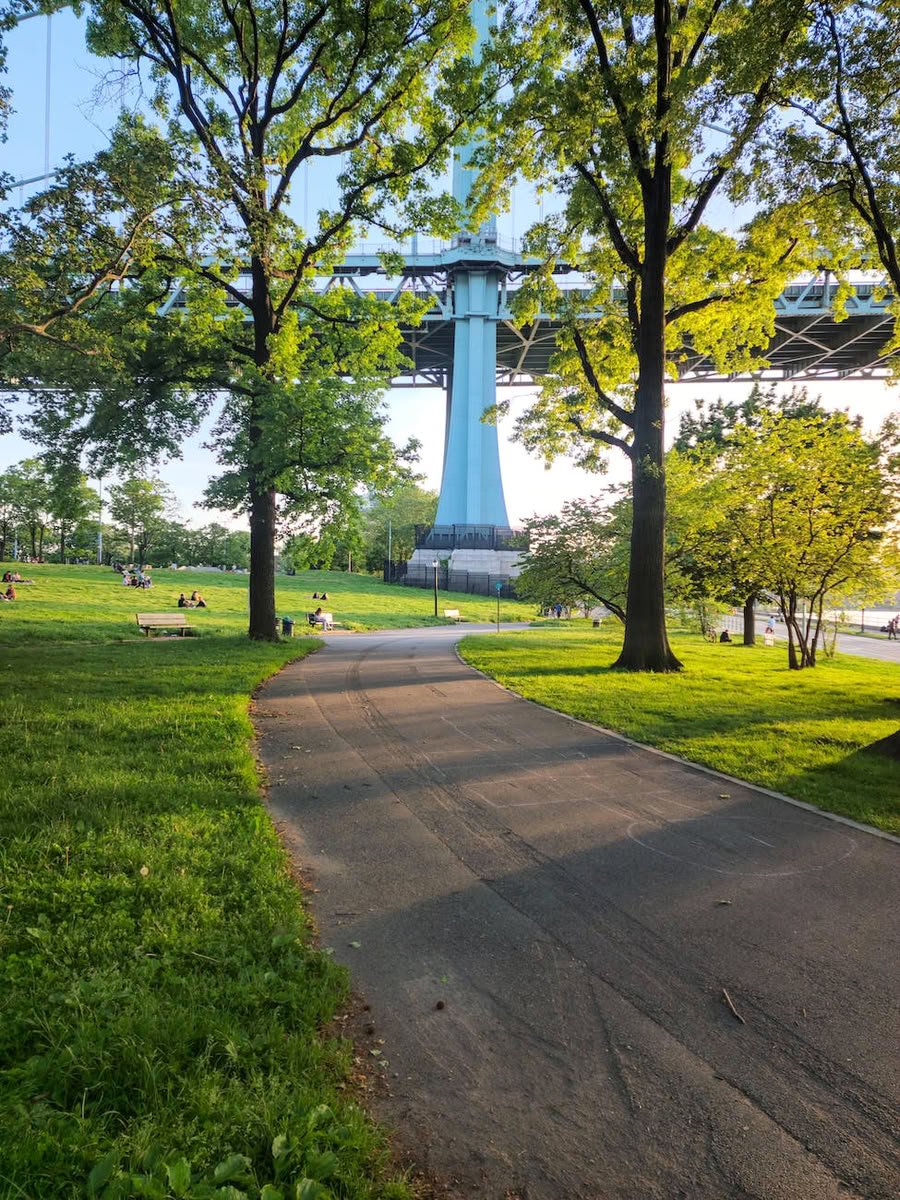
Astoria Park Walking Tour ⁴ᴷ⁶⁰
As a confluence of rich history and natural beauty, Astoria Park, nestled in the borough of
Queens, New York, stands as a testament to the city’s past and present. My recent walking
tour through this charming urban oasis provided an immersive dive into a vivid tapestry of
historical anecdotes, architectural marvels, and stories of yesteryears, all framed within
the verdant embrace of the park.
Astoria Park is gracefully nestled on the western shoreline of Queens, tracing the east bank
of the East River. This panoramic positioning offers not only stunning views of Manhattan’s
skyline and the Hell Gate and Triborough bridges but also a glimpse into the historical
significance of these structures. Both bridges are examples of New York’s robust
infrastructural development during the early 20th century and have been integral to shaping
the city’s modern identity.
As I meandered through the park, its connection to the city’s sporting history became
apparent. The Astoria Pool, the city’s oldest and largest public pool, reflects this
sporting legacy. Built during the Great Depression as a part of the Works Progress
Administration (WPA) project, it served as a beacon of hope and resilience during
challenging times. Interestingly, the pool also played host to the U.S. Olympic Trials for
Swimming and Diving in 1936 and 1964, an illustrious chapter in the park’s past.
Further enhancing Astoria Park’s sporting heritage is the presence of New York City’s oldest
and largest running track, dating back to 1936. This historic track, like the pool, has also
been a WPA project, again highlighting the critical role of the era’s public works in
shaping the park’s character.
As I continued my tour, the history embedded in the park’s landscape expanded beyond sports.
The park served as the site for two World’s Fairs, held in 1939 and 1964. These significant
global events introduced millions to various cultures and cutting-edge technology,
highlighting New York’s role as a hub for innovation and cultural amalgamation.
Astoria Park’s military history is another integral part of its identity. During the
American Revolutionary War, the park’s location served as an ideal vantage point for British
troops. Today, the park’s southern edge houses the Veterans Memorial, paying tribute to
local servicemen and women who lost their lives in World War I, a solemn reminder of the
sacrifices made for the nation’s freedom.
Beyond its history, the park also holds an ecological significance. Its diverse flora and
fauna make it a thriving ecosystem within the city’s concrete jungle. The park is home to
various species of birds, making it a paradise for birdwatchers and nature
enthusiasts.
In conclusion, my walking tour through Astoria Park was more than just a leisurely stroll;
it was a journey through time, exploring the echoes of the past that resonate within its
boundaries. The park serves as a living museum, each corner revealing a new historical tale,
each path leading to a different era, each structure bearing the mark of a different epoch.
Amidst the city’s perpetual hustle, Astoria Park stands as a tranquil sanctuary, reflecting
New York’s dynamic history while offering a lush escape to its residents.